Connect With Me

Twitter Button StumbleUpon Button Delicious Button RSS Feed Button

Sunday, October 28, 2012

Meet Martin!

Stray puppy on campus 

A Fateful Meeting

On my way to a test the other day, I ran across this little guy on the outskirts of campus.  People were walking past him without a second glance while he sat under a tree and wagged his tail.  He looked so lonely, I just had to walk over for a closer look.  My original plan was to give him my lunch, pat him on the head, and continue on my merry way to class. Ha! After he devoured my sandwich, he crawled all over me, positively ecstatic. In between trying to keep him from slobbering too much on my face and putting away my lunch containers, I realized he was just a puppy. I hardened my heart as best I could and started walking away, but when I saw him chase a skateboarder into the busy street and get shooed by university landscapers towards the main road, my well laid plan to feed-and-run was doomed.


Stray puppy in my backseat

The Journey Home

Yes, that is the puppy in the back seat of my car.  He looks completely unremorseful in the photo for the struggle it took to get him across the parking lot and into my vehicle (not to mention for what he DID to my car!).  When I ran out of food with which to lure him, I resorted to picking him up and carrying his wiggly butt the rest of the way.  With the amount of squirming he was doing, it looked like I was dog-napping someone’s pet! Did I mention he was heavy? And I was wearing my backpack and purse, to boot! I have no idea what muscle I pulled in my lower back, but it’s still on the mend today.


The Start of a New Life

As thirsty as he was, I’m surprised he didn’t jump into the pool to cool off! It must have been in the upper 90’s the day I found him.  Doesn’t he look adorable? I made it back to school in time for my exam, thank Goodness! I had two hours to spare, but all it takes is one accident on the freeway and several closed lanes for traffic to slow to a crawl. I doubt “I found a stray dog” would have qualified as an acceptable reason to make up a test for my professor.

After terrorizing Mofi and Hugo, my other dogs, ALL night trying to smell their nether regions, he settled down to a nice meal of one decorative rug, three stuffed dog toys, one tennis ball, and a throw pillow.  Did I forget to say he wasn’t neutered? The house was uncharted, unmarked virgin territory and it was his mission to claim it all.

One sleep-deprived night and a generous donation later, the puppy was safely admitted to a no-kill local shelter.  Everyone who met him on the way fell in love with how happy and soft he was and once at the shelter, he claimed the staff’s hearts by bounding over to the admitting clerk’s desk and trying to crawl into her lap. I left them with the few dog toys that managed to survive the night and last I saw he was inspecting the computer monitor while staff cooed over his cuteness.

I HAD to check on him the next day so I visited the shelter’s website and saw his pretty little face already posted for adoption. I’m not sure if I’d have named him “Martin,” but he certainly doesn’t seem to mind the name they gave him.

Needless to say, my life has been hectic. My last post was back in August! I apologize for neglecting this blog for this long; now that I’ve adjusted to my class schedule and am unhampered by stray dogs (Sad to say, “Martin” wasn’t the first I’d found this past month, but all have happy homes now), I can get back to doing what I love: writing about writing.

Thank you all for hanging in there with me! I won’t let you down!

Wednesday, August 29, 2012

Happy First Week of Classes!


Sitting in the hallway outside a classroom waiting for my class time, I heard a Statistics professor say the following: “You don’t need to use a formal citation style for your papers. This isn’t a writing class and I don’t care about how fancy your vocabulary is.” There were, of course, cheers and scattered clapping in response to those words. It wasn’t the first time I’ve heard a non-English teacher make that pronouncement and it wouldn’t be the last; the very next hour my own professor made the same comment.

If you’re attending upper-level high school classes or a university, you need to keep in mind that the emphasis in higher education has focused to content because instructors assume you’ve already mastered the basics of English writing.  The very same Statistics professor who had moments before said what I’m sure students interpreted to mean “Writing isn’t important” said:

That being said, you need to write in complete sentences. I need to see a thesis statement or I won’t have any idea what you’re talking about. If you turn in a page that is one long paragraph, your grade will NOT be good. I need paragraphs with topic sentences. I need to see tolerably good grammar and spelling.

No one expects you to write like an academician who’s published dozens of peer-reviewed professional journal articles.  You’re just expected to write well. The idea of being judged on one’s writing ability makes most students nervous (I have several writing assignments coming up and even I’m nervous) because 1) not everyone is confident in their writing abilities and 2) half of how writing assignments (i.e., their content) are graded is subjective.

The good news is, with some practice, you can master the basics of writing and eliminate half of the stress associated with writing assignments.  I’ll be working on posts that focus on some of the most common difficulties writers face, like when to start a new paragraph and how to write topic sentences. But just because I don’t write too often about spelling and grammar issues doesn’t mean they’re not important enough for you to address. 

Don’t take just my word for it that grammar and spelling are fundamental. Check out this book review published in the Daily Cougar yesterday. The journalist reviewed a book written by a University of Houston alumnus and, goodness, was the review ever critical. If you ever thought spelling and grammar weren’t important, then this sentence from the review should help change your mind:

Any big ideas grasped within the novel feel incomplete due to clunky prose rife with spelling and punctuation errors.

The takeaway message is: Keep working on your spelling and grammar issues, NEVER forget to proofread your work, and seek out help from a competent source if you know you need assistance to find and correct your errors.  

Here’s to a great start to the new semester!

Photo credit: Markrabo

Monday, August 20, 2012

New Facebook Page and Pinterest Account

Facebook Page

Alison T. was nice enough to point out to me this past week that I have yet to join the rest of the online community in making a Facebook Page for Writing Simplified.  I got started right away on the project and managed to hash out a page that I’m mostly happy with. I’m still not exactly sure what I’ll do with the page, but looking at other blogs’ FB pages has given me lots of great ideas.

While I was at it, I went ahead and signed up for a Pinterest account, since that seems to be all the rage these days.  It’s tricky figuring out how to make a photo-based site work for a writing website.  When I come up with boards directly related to this site, I’ll post about it here. In the meantime, I’ve just been having fun pinning things that entertain me.

Pinterest Account

You’ll find the links to the new pages in the upper right hand corner of this page. Just look for the Facebook and Pinterest icons.

Links Bar

Monday, August 13, 2012

How to Write a Thesis Statement

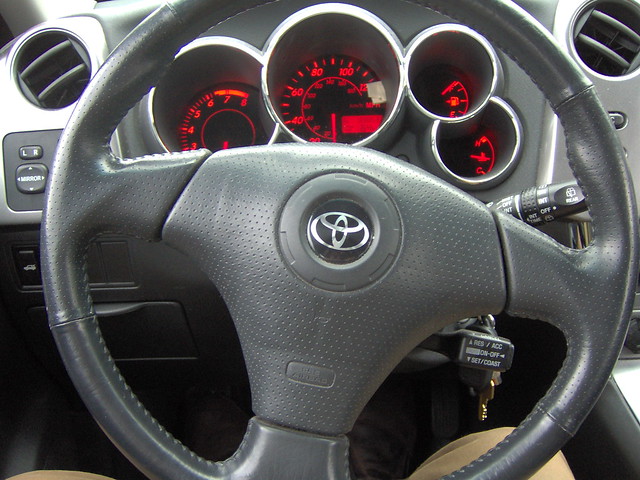
Toyota steering wheel

Looking over the posts I’ve written throughout the past two years, I realized I have yet to write one about one of the most fundamental requirements of writing an essay.  This post about how to craft thesis statements will rectify that most egregious oversight.

An essay without a thesis statement is like a boat without a rudder, a car without a steering wheel, a watch without hands.  A thesis statement gives you a chance to tell your readers exactly what your paper is about.  Without it, they may mistakenly latch onto an element in your introduction as your main idea and become utterly confused when the rest of your paper takes a different focus.

The thesis statement is as much for you as it is for your readers. Having a single statement that pinpoints the focus of your paper will give you direction and keep your writing focused.

It has taken me so long to write this post because there are already so many very good guides available online for how to write thesis statements. These are the ones I like to refer students to when I introduce the task to students:

Be sure to visit these guides for well-written help regarding thesis statement. However, as academically valuable as these sites are, I’ve found that their guides are a little lacking in differentiating between types of essays and in helping students get from point A to point B. For example, Indiana University’s WTS is one of the few sites that provides examples of thesis statements, but their examples jump from the “bad” thesis statement:

My family is an extended family.

to the “good” thesis statement:

While most American families would view consanguineal marriage as a threat to the nuclear family structure, many Iranian families, like my own, believe that these marriages help reinforce kinship ties in an extended family.

without explaining how the original thesis statement was revised into the final product. The University of Wisconsin’s Writing Center does provide a thorough view of how a thesis statement evolves from draft form into finished product, but their guide combines thesis statement and purpose statements, which may confuse students.

Instead of redefining thesis statements, I will just show you how I introduce the idea to students and also try to fill in the gaps missing in existing guides online. What follows is my contribution to online guides detailing thesis statements.

What IS a thesis statement?

To put it simply, a thesis statement is an essay’s main idea distilled into one or two sentences.  It’s important when starting out, to start out simply. If you try to write a thesis statement that looks like one of the finished examples in the University sites I linked to above, you may feel a little (or a lot!) overwhelmed.

Since your thesis statement will vary according to the type of essay you are writing, it’s important to look at how each essay type affects thesis statements.

Essay Types & Thesis Statements

There are two main types of essays under which all others fall: expository essays and persuasive essays. These types of essays differ drastically and so will their thesis statements.

Expository essays are full of exposition. In other words, they are descriptive in nature and explain a topic in more detail. Narrative essays (personal essays) fall under this category, as do some analytical essays (e.g., book reports, science and historical reports, etc.).  Thesis statements for expository essays are unbiased, factual statements pinpointing what information you will be reporting in your essay.  They do not include value judgments on the nature of  your subject matter.

Persuasive essays try to convince the reader that one point of view is better than another.  These essays are argumentative in nature and work towards changing the reader’s mind about his or her stance on an issue (if it differs from the writer’s).  Thesis statements for persuasive essays are biased and clearly state the writer’s position on a topic. They do include value judgments on the nature of your subject matter.

I give examples of both types of essay thesis statements later on in this blog post. Scroll down if you really have to see them now.

Refining a Thesis Statement

Coming up with a “draft” thesis statement is a piece of cake. All you do is jot down a broad sentence about your general paper topic. The hardest part of writing a thesis statement for higher education is making it specific enough to sufficiently narrow the focus of your essay while still giving you enough material to reach your required page-count.  Further complicating the task is that your thesis statement will change as you write your paper and learn more about your topic.

Since crafting thesis statements tends to be intimidating for many people (frankly, it scared the bejeesus out of most of my students) and most lack the confidence that they even CAN come up with a “smart-sounding” statement worthy of higher education, I like to start at the very basic level and go from there.

Step 1: Identify Your Topic

Like the saying “Shoot for the moon. Even if you miss, you’ll land among the stars,” identifying your topic on the broadest of levels will give you a general idea of where to start narrowing your focus.  Don’t try to put it into sentence form yet, just get the overall issue down on paper.

If your paper topic has already been assigned, this step has already been done for you. For example, if you were assigned to write about an issue related to World War II, then your general paper topic will be:

  • World War II

If your paper topic has not been assigned, you have to come up with one on your own.  Since you have to invest energy and time into writing a good essay, make sure it’s a topic that you enjoy. Examples of general paper topics are:

  • Dogs
  • Hospitals
  • Bacteria

These are as general as you can get without losing sight of an issue you can reasonably address in a short paper. For example, “Animals” encompasses far too many species to write abut in sufficient detail in an essay, even one that’s 10 pages long.  If you can get even more specific, by all means, do so! Instead of “dogs,” narrowing your paper down to a specific breed of dog, like “australian shepherd,” or canine behavior, like “agility training,” will make writing a focused thesis statement even easier.  Most of my students can’t pinpoint a topic with that level of specificity at this point in the stage, though, so overly-broad topics are fine at this point.

Step 2: Narrow Down Your Topic

Instructors and students are ever at odds about how narrow their essay topic is.  Students are convinced there’s no way they can come up with enough material to write an essay if their topic is too limited, and it takes a lot to persuade them otherwise.  Take our word for it, if for no other reason than you’ll get a lower grade for tackling a topic that is too broad: You need to limit your topic.

This is what the previously “assigned” topic will look like once it is narrowed down:

  • War crimes committed during World War II

This is what the self-chosen topics will look like narrowed down:

  • Hip dysplasia in dogs
  • Cancellation rates in hospitals
  • Nitrate-reducing bacteria

A note about limiting your topic: If you’re not used to writing higher-level essays, then it’s understandable that you’ll struggle to come up with enough ideas to meet your page limit. Good teachers will take the time to guide you and help you come up with more main points when you think you’ve exhausted your options.  If you’re taking an online class or your teacher isn’t as helpful as you’d like (or, let’s face it,  is too overworked to address your problems), there IS help available elsewhere. Find the tutoring services at your institution (free or for-a-fee) and schedule an appointment, ask for help from a previous instructor you’ve had who was helpful, ask help from your friends and family (if they’re good at writing), or look to online forums and discussion boards for help (and take it with a grain of salt).

Step 3: Narrow Down Your Topic Some More

The key to coming up with a great thesis statement is specificity. The more specific you can make your topic, the more sources you will be able to find that are directly relevant to what you are writing about.

If you’re searching through peer-reviewed journals (through your institution’s library or Google Scholar), you’ll notice that the article names are extremely specific. For example, here’s one from the Journal of Trauma and Acute Care Surgery: “Impact of age and anticoagulation: Need for neurosurgical intervention in trauma patients with mild traumatic brain injury.” Notice how the authors didn’t just write about “Trauma” or “Age and anticoagulation”? They limited their article to only the effects of age and anticoagulation on patients with mild traumatic brain surgery who need neurological intervention. That’s pretty darn specific!

If you look at the Wikipedia article on World War II, the number of countries and groups that committed war crimes is so extensive it warrants its own main article.  There’s no way an essay can comprehensively cover every aspect of every country or group that committed crimes. If you want your paper to be more than just “Many people committed war crimes during World War II” and a listing of all the perpetrators, you NEED to limit your topic. Since the Holocaust in Germany has been written about so often, I’m going to focus my attention on a different country.

This is what our previously assigned topic looks like when it’s more specific:

  • Croatian perpetrated war crimes during World War II

Our self-chosen paper topics are no better off than our assigned paper topic was.  Hip dysplasia in dogs is a HUGE topic that spans causes, symptoms, treatment, and even what kind of breeds are more susceptible to developing the disease. Just as broad is the topic of hospital cancellations. Cancellations of what and where? NRB needs to be refined as well since its applications range from medical to industrial.

After some refining, this is what our self-chosen topics can look like:

  • The cause of hip dysplasia in canines
  • Cancellations of elective surgeries in the Day Surgery Unit
  • Corrosion management in oil fields through the use of NRBs

How will you know you’ve limited your topic enough? When you can’t find sources to cite anymore.  If you’re looking for sources to cite about hip dysplasia in pomeranians over the age of 8 and you can’t find anything (or you can only find one article about it), you need to back up a step and broaden your topic.

Step 4: Write a Sentence

Now that our topics are sufficiently limited, it’s time to form a complete sentence out of it. The type of essay you are writing will determine how your sentence will develop. Expository essays are just going to state a fact and persuasive essays will need to judge the value of something (it’s good enough a position that you should adopt it OR it’s a bad position and you should not adopt it).

Let me transform all of our topics into thesis statements for both kinds of essay types so you can see the difference. If your sentences look simpler, THAT IS O.K. Most students aren’t going to be able to come up with more than “Many war crimes were committed by Croatia during World War II” and “Hip dysplasia is a problem caused by different factors in canines” at this stage. Once you start researching your topic, you WILL be able to frame your sentence more elegantly because you’ll know more about your topic and you’ll have seen the vocabulary others use when writing about the topic.

Expository essay thesis statements using our topics:

  • One generation later, the war crimes committed by Croatia during World War II remain fresh in victims’ minds.
  • One of the most commonly diagnosed degenerative diseases in dogs, the causes of hip dysplasia in canines remain unclear as experts struggle to categorize it as genetic or environmental.
  • As the health care system continues to make cutting costs a priority, cancellations in the Day Surgery Unit of elective surgeries has come under scrutiny.
  • From the day they are erected, oil platforms are subjected to a number of environmental factors that slowly destroy their structures; nitrate-reducing bacteria is one method used by engineers to fight underwater corrosion.

Persuasive essay thesis statements using our topics:

  • While not as famous as Germany’s Holocaust, Croatia’s war crimes were just as brutal and warranted repercussions from the UN just as severe as those handed out to Germany.
  • While environmental factors may contribute to the severity of osteoarthritis in canines, the principal cause of hip dysplasia in dogs is genetic.
  • If the US health-care system wishes to cut costs, it needs to address the rate of elective surgery cancellations in Day Surgery Units.
  • Nitrate-reducing bacteria, while expensive, should be a preventative measure utilized by all oil platform engineers to combat underwater corrosion.

Step 5: Admire Your Work

Your thesis statement isn’t “done” yet, but you’ve made great headway towards crafting your final product.  The more informed you become about your topic as you search for sources, the more you will want to refine your statement to conform with changes in focus you may want to take. If your statements aren’t as “smartly” worded as mine, don’t be discouraged.  It’s not the wrapping paper that counts, but what’s inside the box.  If your topic idea is no good, no amount of pretty words will make it worth writing about. In the same way, if your topic is good and you limited it well, your reader is going to recognize that even if your thesis statement isn’t full of thesaurus words.

Just remember to go back and revisit your thesis statement periodically as your write your paper to make sure that 1) it still leads you in the direction you want to go and 2) your main points are relevant to the direction you told your reader you were going to go.

Keep Practicing!

I could provide 10 more examples of developing a thesis statement from draft to finished form, but it still wouldn’t be enough to give you a fool-proof guide for crafting your own thesis statements.  Every paper is as unique as the person writing it and no guide can properly account for those differences.  As unpopular as this advice is going to be, I have to say that the only way to get good at writing thesis statements is through practice.

It may sound cheesy, but I honestly believe every single person is capable of writing great thesis statements. Once you let go of your fear of failing and just go for it, you’ll be well on your way to being a thesis statement master.

Photo credit: Lonnon Foster

Thursday, August 2, 2012

Collie Convalescing: Mofi’s Oral Recovery

P8010005

Mofi saw how much attention Hugo received after his teeth cleaning and decided he wanted some of that loving too! Here he is recovering after having several places on his upper gums cauterized (to prevent bacterial growth). Even though Mofi didn’t have any teeth extracted, he was feeling out-of-sorts enough for Hugo to lend him his favorite squirrel toy to snuggle up with. Now that’s love! I grabbed the camera as soon as I saw him snoozing – the photo above was not staged!

I bought the little guys C.E.T. HEXtra Premium Oral Hygiene Chews with Chlorhexidine (Thanks, Meyerland Animal Clinic, for recommending them!) and that, coupled with a weekly teeth-brushing regimen, these guys should never need oral surgery again.  I’m toying with the idea of adding some additive to the dogs’ water since that seems fairly easy and non-invasive; if anyone has any experience with it or other tooth cleaning products and would like to recommend something, I’m all ears. 

Hugo was a real trooper and kept a close eye on his slightly-traumatized bigger brother the whole day after I brought Mofi home. Here he is (below) giving him a pep talk and letting him bed down in the chihuahua-sized blanket I knit for Hugo. You can’t tell from the picture, but Mofi’s lower half is uncovered.

Now that my furry babies are taken care of, I can get back to updating this blog with more writing-related blog posts. Thanks for being patient with me and sticking with the blog during this hectic time!

P8010002

P8010004

Tuesday, July 24, 2012

Student Essay Example: The Word Saggin’ Spelled Backwards (Part 2)

 Red pen on paper with corrections

As indicated in this post’s title, this blog post is a continuation of Part 1. If you have not yet read the student essay posted in Part 1, you may want to so that the commentary in this post will be more meaningful.

Overall Grade

Gerard’s essay is in pretty good shape, but is still in need of both revision and editing.  The fact that it needs revision is what makes the paper incapable of earning an A.  Very few essays will be flawless and a grade of “100” does not indicate perfection (although there are some professors who never give a paper higher than a “99” for principle’s sake).  What an A grade does demand are errors on only the editing level: grammar, spelling, and word choice. Revision requires changes in the content and organization of an essay, and are therefore more drastic and costly in terms of grade points.

That said, Gerard’s paper is a solid B to B+ in my book.  I tend to grade more leniently than others, though, as I only count off once for grammar and spelling errors instead of for each and every time a particular error occurs.  I do so to encourage students to tackle more advanced sentence structures and to try and incorporate new vocabulary in their writing, but I understand why other teachers prefer to mark off for every instance.  Because Gerard’s professor was stricter in his grading of errors, Gerard earned a C on this paper.

Revision Errors

Because revision should come before editing in the writing process, I’ll look at this paper’s content errors first.  There aren’t that many issues, but they have a big impact on how focused the essay is.

  • The first paragraph in any piece of writing is the most critical. The introduction has to set the tone and focus for the rest of the essay and, unfortunately, Gerard’s doesn’t.  The reason for this is the lack of a thesis statement.  If you read the introduction in isolation, you’d think the paper were going to be about the “N” word.  That’s clearly not the case.  This paragraph needs one more sentence that tells us that the paper is about how sagging pants and socio-economic status (i.e., low class and ignorance) are linked.
  • The third paragraph includes the sentences, “It’s too bad that they do not realize that they are sending a bad message to the people who have made this trend what it is. These softies from the suburbs do not realize that they are being laughed at by real thugs.”  It’s an interesting direction to take, but not one that fits the scope of the paper.  As the essay discusses how sagging is tied to ignorance, painting the trend in a positive light by linking it to real street-smarts undermines the main point.  Gerard had a wealth of knowledge about the rougher part of city-life and I want him to know that his experiences make him an expert able to write authoritatively on the topic.  What makes a person a real “thug” is just a topic for a different paper, one that would no doubt be fascinating and well-written if Gerard ever wanted to pen it.
  • The use of the word “Thug(s)” diverts the focus of the paper and introduces a potentially confusing new term.  By changing every instance of the word with “Sagger(s),” the paper gains clarity.
  • The 5th paragraph should actually be the 3rd paragraph as it introduces the history and background of the sagging trend.
  • The 4th paragraph should start with “Inner-city and suburban saggers…” and the 6th paragraph should start with “For saggers, regardless of location,…” to make the organization of the main points clearer.
  • The conclusion needs to tie-back to the “N” word, the idea the paper first began with. 

While these changes aren’t severe, they would make a huge difference in how smoothly the paper flows. These errors would all have been spotted easily by outlining the paper. As the person grading it, I outline it myself as I go along to see if I can find the main point of each paragraph and their progression. Outlining doesn’t take long and really makes such a world of difference in keeping an essay focused.

As it stands, the paper starts strong but loses focus after the first page.  That’s not surprising and quite normal, actually, as most high-schoolers have never been asked to write a paper longer than two pages.  I could wax poetic over what a travesty that is (While some teachers are to blame, some aren’t; I was ordered to stop assigning essays when I taught high school because a strong essay wasn’t required to pass the TAKS test), but ultimately it is what it is.

Editing Errors

While I will mark and label every error I see as I grade a paper, I only choose the three most prevalent errors to focus on in my comments.  Fixing a couple of grammar and spelling problems at a time and keeping an eye out for them in the next paper will eventually lead to error-free papers when the next most-encountered errors are addressed, and so on.  In this paper, Gerard has several errors that need addressing.

  • Semicolons join two closely related independent clauses. Examples of misused semicolons in the paper are: “From what I have grown up with in Southwest Houston; black, white, brown, and yellow people…”, “Thugs only have one thing on their minds; being cool”, and “But by this time, unless they come to their senses, and realize that they can still make a change for the better; they pass up on those opportunities.” 
  • Misspelled word: “selling” not “sailing.” When I first read the paper I thought perhaps Gerard knew drug terminology that I wasn’t aware of.  It took my mom pointing out the misspelling for me to realize he had used spellcheck and hit “ok” to all changes without checking that they were the correct ones. 
  • Excessive comma use. Gerard uses commas quite a bit in this paper in places they don’t belong.  For example, after almost every instance of “Although” he inserts a comma, even when the clause isn’t finished yet! Take this sentence for example: “Although, I have noticed a decline in the number of blacks and Hispanics who wear their pants below their waists, this style of stupidity is still going strong.” If you read the sentence out loud, you should feel yourself NOT pausing after “Although” as the phrase isn’t finished until “waists.”
  • Orphaned quotation. While not a repetitively occurring error, dropping a quote into a paper without integrating it into the paragraph is a big no-no.  The quote in this case is “Rappers such as Snoop Dogg and Tupac Shakur promoted the style in videos and on CD covers” (Glanton).  Prefacing the quote with “This mimicry has not escaped the eyes of the public as Glanton writes ‘Rappers such as…..’”  would let the reader know why the quote is being used and how it contributes to the paragraph’s main point.
  • Ad-Hominem Fallacies. There is absolutely nothing wrong with being passionate about a topic, but name-calling doesn’t belong in academic papers.  Not because it’s “mean” (“honest” would be the word I know many students would use), but because it actually makes your paper less persuasive.  Rhetorically, it’s a bad move.  Sentences like “Since these people are seriously stupid they fail to realize the important things in life…” hurt your case by placing people who either take part in sagging or have friends or relatives who are saggers on the defensive. 

Strengths

It may appear that I’m being very hard on poor Gerard’s paper, but it’s only because I know how much better his work can and should be! This paper is so close to being an A paper and that’s the grade I know he wants and the one I want to give him.  He has to earn it fair and square, though, and by pointing out the errors in his early essays, it’s my hope he’ll fix them for later essays and work his way up to an A grade.

This essay has a great deal going for it. First of all, I LOVE the way he used the fact that “Saggin’” spells “Niggas” backwards to tie ignorant language with disheveled appearance.  His paper does not link Black people or Hispanics only to the trend; rather, it speaks about the type of socio-economic classes most vulnerable to the trend and the life-style that comes with it.  This sentence states the link beautifully: “In much the same way the ‘N’ word is a misrepresentation of the ‘proper’ way of saying the word ‘Negro,’ so is the way adolescent males are currently choosing to wear their pants.”

This paper is and always will be one of my favorites because Gerard reached past the stale, over-used topics his peers were writing about to find a topic that was relevant to himself. To paraphrase a popular saying: He aimed for the moon and fell among the stars.  I wonder how he’s doing these days.  The last time I heard from him was several years ago when he’d e-mailed me to let me know he’d been admitted to Texas A&M University. I forwarded that e-mail to everyone I knew, I was so proud of him!

He was the kind of guy one would call “rough around the edges” but he surprised me with how imaginative and well written his essays were.  I took one look at his silly-looking gigantic sneakers (those big Air Jordan kind that seem to be so popular among kids), baggy basketball jersey (he wore one to every class!), and flashy necklaces that hung to his waist and thought to myself that I was going to have to teach him how to write separate paragraphs in an essay.  I still remember how shocked I was and how embarrassed to have stereotyped him I felt when he turned in his first essay!

He sat in the middle of the front row every class day next to a Hispanic student with a shaggy mop of hair on his head that he was constantly brushing out of his eyes. Believe it or not, that guy’s name was Gerardo.  Ha! Gerard and Gerardo sat front and center side by side every Tuesday and Thursday. Those two made me love coming to class.  I only had them for one semester, but 5 years later I’m still thinking of them and getting teary-eyed.

Photo credit: CellarDoorFilms

Chihuahua Convalescing: Hugo’s Oral Recovery

Hugo Teeth Cleaning Summer 2012 04

Today I am staying home from work to nurse my little chihuahua back to health.  With a face that cute, who wouldn’t call in sick to stay home with the little guy?! Hugo had 6 teeth extracted yesterday during his teeth cleaning at Meyerland Animal Clinic, which, along with the 4 he had removed several years ago, makes him 10 teeth short of a full set of choppers.  That’s not too bad for a 7 year old chihuahua!

Dr. Werner noticed several of his teeth were mobile after we complained about his bad breath (not that dogs normally have minty fresh breath!) and urged us to get his teeth cleaned.  When she called to give me an update during his cleaning and said he had been “difficult” to prep for surgery, I thought to myself, “That’s my Hugo!” He’s not the sweetest dog when it comes to poking and prodding, and clipping his nails is a nightmare.

Now that his teeth are in perfect shape, it’s time to start preventative measures! Now I just have to find a chihuahua-sized toothbrush….

Pictured above is Hugo with his favorite stuffed animal.  The staff at Meyerland Animal Clinic even let him take his squirrel with him to his procedure! Below is Mofi on his walk yesterday. He didn’t even notice his little play-buddy was missing! I asked him where Hugo was and he gave me this “Who’s Hugo?” look! Ha! He was excited when I brought his accomplice-in-mischief back home, though.

Mofi During Hugo Teeth Cleaning Summer 2012