Connect With Me

Twitter Button StumbleUpon Button Delicious Button RSS Feed Button
Showing posts with label writing tips. Show all posts

Thursday, March 14, 2013

Writing Around the Web

Internet neon signs

As overflowing as the Internet is with websites of every shape and kind, it’s still difficult to find fresh blog posts and articles that deal with academic writing.  Posts about grammar are a bit easier to locate (for example, Grammar Girl provides short, painless tips for mastering the intricacies of English grammar), but they focus almost exclusively on syntax, only rarely covering the full writing process. I’ve put together a list of several fairly recent posts about academic writing that people not actively searching for help with school and workplace writing may have missed.

  • Dave Kerpen’s post “Want To Be Taken Seriously? Become a Better Writer” describes not only why writing well is important for everyday people, but it also lists ways to improve your writing skills.  As the CEO of LinkedIn, a very successful business-oriented social networking site, I’d consider him qualified to instruct others how to improve their professional social standing.

  • One of my pet peeves is needlessly long writing, making Melissa Donovan’s post “Improve Your Writing By Eliminating Redundancies” near and dear to my heart. Although she caters to creative writers, her tips for identifying redundancies can easily be applied to academic writing.

  • Paul Graham explains the steps involved in writing an essay, start to finish, in one short, well-packed paragraph. “Writing, Briefly” is more than just a list of tasks, though; it includes tips and suggestions that took me years to discover on my own.

  • Every teacher has a different way of teaching the same concept, some instructors teaching it better than others. Kate and Maggie Roberts are former middle-school teachers who teach persuasive writing with a twist. Their article “Learning the Language of Lawyers: Writing Compelling Arguments” demonstrates persuasive writing using an approach I wish I’d used with my own.

I hope you enjoyed these articles as much as I did!


Photo credit: HDZimmermann

Tuesday, December 25, 2012

Editing Your Writing: Removing Pleonasms

Redundant advertising on shampoo bottle

Brevity is one of the characteristics of good writing; it’s also one of the hardest for writers (especially new ones) to achieve. Writers have a tendency to hang on to the words they commit to paper, even when editing them out would result in better prose (a process Sir Arthur Quiller-Couch called “murdering your darlings”). When the writing is your own, you’re often the last person to realize some words, sentences, or even entire paragraphs are superfluous and need to go. It’s best to start desensitizing yourself to the pain of deleting your own writing by editing out redundancies that are easy for even novice writers to spot.

These redundancies are called pleonasms, words that are repetitive and unnecessary to the meaning of a sentence. They usually appear alongside a synonym and are easier to recognize than other forms of verbiage because two adjacent words that have the same meaning tend to call attention to themselves. An easier way to identify pleonasms is to remember they are the opposite of oxymorons, a combination of contradictory terms (e.g., jumpo shrimp).

Examples of Pleonasms

Examples of redundant phrases can be found very easily just driving to the grocery store or the local mall. If you’re not the adventuring type, opening the paper or turning on the television will yield just as many pleonasms. Here are just a few of the more common ones:

  • “Free gift” – Presents, by definition, do not cost you anything.
  • “New [and] improved” – Improvements can only be done to pre-existing items.
  • “Lift/Raise/Climb up” or “Descend/Fall/Lower down” – Each of these verbs already contains directionality.
  • “Unexpected surprise” – Surprises are never expected.

You should start to get the idea what a repetitious phrase looks like now. Sometimes there may be a conjunction like “and” or a comma separating words that are synonymous, as in the phrases “old and ancient ruins” and “frigid, cold depths.” In these cases, one word can still be deleted to make the message more succinct (just remember to also remove the conjunction or comma!). For a very thorough list of English pleonasms, see Pleonasms and Redundant Phrases.  Once you start keeping your eyes peeled for redundancies in writing, you’re going to start seeing pleonasms everywhere!

Great writing doesn’t have to be overflowing with flowery language that spills onto page after page.  Some of the most beloved and impactful novels we have are slim paperbacks that barely break 100 pages. George Orwell’s 1984, John Steinbeck’s Of Mice and Men, and Ray Bradbury’s Fahrenheit 451 all come to mind.

I cannot tell you that editing your own work is easy, especially when it comes to deleting words you spent long hours coming up with, but what I can assure you is that it gets easier with practice. Removing repetitious phrases from your writing is a simple exercise that is guaranteed to make a noticeable improvement in your work.


Photo credit: George Hatcher’s Flickr Photostream

Wednesday, August 29, 2012

Happy First Week of Classes!


Sitting in the hallway outside a classroom waiting for my class time, I heard a Statistics professor say the following: “You don’t need to use a formal citation style for your papers. This isn’t a writing class and I don’t care about how fancy your vocabulary is.” There were, of course, cheers and scattered clapping in response to those words. It wasn’t the first time I’ve heard a non-English teacher make that pronouncement and it wouldn’t be the last; the very next hour my own professor made the same comment.

If you’re attending upper-level high school classes or a university, you need to keep in mind that the emphasis in higher education has focused to content because instructors assume you’ve already mastered the basics of English writing.  The very same Statistics professor who had moments before said what I’m sure students interpreted to mean “Writing isn’t important” said:

That being said, you need to write in complete sentences. I need to see a thesis statement or I won’t have any idea what you’re talking about. If you turn in a page that is one long paragraph, your grade will NOT be good. I need paragraphs with topic sentences. I need to see tolerably good grammar and spelling.

No one expects you to write like an academician who’s published dozens of peer-reviewed professional journal articles.  You’re just expected to write well. The idea of being judged on one’s writing ability makes most students nervous (I have several writing assignments coming up and even I’m nervous) because 1) not everyone is confident in their writing abilities and 2) half of how writing assignments (i.e., their content) are graded is subjective.

The good news is, with some practice, you can master the basics of writing and eliminate half of the stress associated with writing assignments.  I’ll be working on posts that focus on some of the most common difficulties writers face, like when to start a new paragraph and how to write topic sentences. But just because I don’t write too often about spelling and grammar issues doesn’t mean they’re not important enough for you to address. 

Don’t take just my word for it that grammar and spelling are fundamental. Check out this book review published in the Daily Cougar yesterday. The journalist reviewed a book written by a University of Houston alumnus and, goodness, was the review ever critical. If you ever thought spelling and grammar weren’t important, then this sentence from the review should help change your mind:

Any big ideas grasped within the novel feel incomplete due to clunky prose rife with spelling and punctuation errors.

The takeaway message is: Keep working on your spelling and grammar issues, NEVER forget to proofread your work, and seek out help from a competent source if you know you need assistance to find and correct your errors.  

Here’s to a great start to the new semester!

Photo credit: Markrabo

Sunday, June 3, 2012

How to Find Main Points for Your Essay

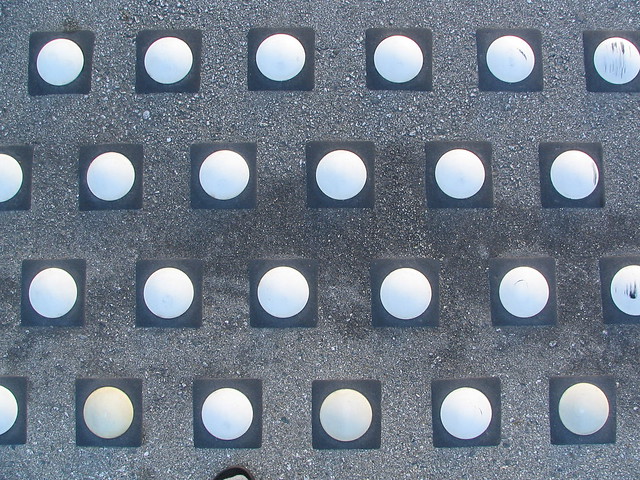
Picture of dots on a street

Several weeks ago, a distraught student left this comment on my blog post “How to Write an Essay FAST”:

How are you meant to come up with the 3 main points? Like, that makes no sense; I can't just pull them out of thin air! How is it meant to be done?! And if no one can tell me (which it seems every teacher just says I need to think about the text more), then it can not be something that can be graded! Sorry for the rant - super confused and effed for my essay!

Unfortunately, I don’t think this blog post came out in time to help that student write his/her essay, but hopefully other people struggling with the same issue will be able to benefit from this post in time for their deadlines.

If you too struggle with coming up with main points for your projects, you are NOT alone.  This is the most frequent issue students will come to me for help with.  Once they know what to write, they can generally handle the question of how to write their essay effectively on their own.   Even professionals face this issue! They’ll be given the topic of their presentation, but they have to come up with the main points themselves.

While I can come up with main points for my students, I dislike doing so.  They  will need to find a way to come up with them on your own so they can function on their own, when I’m not there to help.  Luckily for them (and you!), I’ve developed a series of questions that makes finding main points much easier.

I will present the questions first. It may seem English-oriented, but it will work for all subject areas.  See the examples that follow where I  use it for English, history, and science topics to learn how to apply it to different subjects.

Note that these topics reflect the broad ones normally found in high school and early undergraduate classes. Higher-level undergraduate and graduate classes assign much more content-specific essay topics that pull from the material discussed in class. Usually these higher-level prompts include several questions you must answer as you write your paper, and so guide you in that way towards your finished product.

English: Cyberbullying
History: Michael Jackson
Science: Stem cell research

The Questions

Who are the CHARACTERS
What is the SETTING?
What is the PLOT?


Using just these questions will guarantee you three main points, the standard for most high-school essays. If you're in a college preparatory high-school or in college, you may need more, depending on the length of your project. If that's your case, don't worry; in the following examples, I'll show how you can get several main points from one question.


Who are the CHARACTERS?

While the word “characters” calls to mind literature in many people, it can be applied to non-literary people, places, and things.  The character of an essay is whoever (or whatever) will be the main focus of the paper. You can include points about other “characters” as well, of course, but only if they are connected closely to the main character of your essay AND don’t stray from the essay’s thesis statement.

If you’re still confused about what exactly a “character” in an essay is, the following examples should help you understand the idea more clearly. 

English: Cyberbullying

The main “character” would be cyberbullying, the act.  You definitely need to devote at least a paragraph towards defining and describing the act for readers.  Even if most people are familiar with the term nowadays, defining it and including relevant examples clearly tells readers what YOU mean when you use the term.  If your page limit gives you the room, other characters include the bully and the victim. The terms may seem self-explanatory, but these terms  actually become controversial when the Internet is involved. Google legal cases involving cyberbullying to find out just how much explanation these characters need.

History: Michael Jackson

Obviously, the main character of this essay would be Michael Jackson.  A thorough essay will take the time to describe who this man was for readers who aren’t familiar with the details. If your essay’s thesis statement focuses on Michael’s personal life, additional characters that can be elaborated on are his father, Michael Joseph Jackson, and his now ex-wife, Lisa Marie Presley.  However, if your essay deals with the people and events who shaped him into the man he ultimately became, Lisa Marie Presley would NOT be a main point because their 8 year relationship (4 years married and 4 years divorced) took place when he was already an adult. 

Science: Stem cell research

The character for this topic would be stem cell research.  However, that term includes many subtopics that need to be defined.  A more complete list of “characters” would be adult cells, cord cells, and embryonic cells. The type of research also needs to be described. The controversy surrounding this type of research could also be counted as characters (those for stem cell research and those opposed to it), but I will be labeling those as plot elements.

What is the SETTING?

The “setting” of a topic includes not only its physical location, but also its historical context and closely related ideas.

English: Cyberbullying

In the case of cyberbullying, the setting is the Internet. Depending on your thesis statement, you could be writing about how the intangibility of the World Wide Web has created a society in which people can be bullied even within the confines of their home.  If you are looking at the legal angle of cyberbullying, then you could tackle the issue of responsibility (i.e., does the physical location of the computer used to make the attacks determine responsibility).

History: Michael Jackson

The topic of Michael Jackson could cover a number of different settings.  His physical locations, for example (i.e., his birthplace, the schools he attended, the many residences he has called home, and his travels), could be considered a setting, as could the era in which he grew up and lived (i.e., the state of the music industry when he first entered it and how it changed, the evolution of media from vinyl, to compact disc, to mp3). Depending on how biographical your essay is, I would include his contemporaries in this category as well.

Science: Stem cell research

There are quite a few different settings for stem cell research. You could approach the topic by identifying the physical location of research (i.e., where the laboratories are located that pursue this type of research, the equipment and media used in the laboratories for research).  The historical context of stem cell research is also an important setting as an understanding of this research requires knowledge of what technologies were available in the past and are currently at our disposal.

What Is the PLOT?

Traditionally, the plot is a literary term that describes the series of events that make up a story and how they relate to each other.  I like to think of a topic’s plot as what has happened in the past concerning the topic, what is currently happening, and what may happen.  The plot is NOT historical context, however.  Historical context is more descriptive and passive whereas the plot of a topic is active and definitive.  Hopefully the following examples will explain what “plot” is and isn’t better than I have here.

English: Cyberbullying

In the case of cyberbullying, the plot would include the first recorded instance of bullying via the Internet.  It would also include any legal cases that have set legal precedent and case law regarding online bullying.  Most importantly, the plot is made up of the conversation surrounding the topic. Are there contrasting viewpoints over important issues pertinent to this topic? What about proposed laws or practices that have not yet been enacted? If you can figure out what people are arguing over, then you’ll find the meat of this main point.

History: Michael Jackson

Seeing what makes up the plot for an essay on Michael Jackson is a little easier because there are so many significant events that drive this celebrity’s “story.” If you have not yet discussed his childhood as part of the characters or setting points, you can certainly include it under this point. Likewise, his marriage and the birth of his children could have been included under characters or the plot point.  The allegations made against him, his creation of Neverland Ranch, his fame, and ultimately, his death, all fall under this category. The slant you will put on your paper all depends on what your thesis statement says.

Science: Stem cell research

Stem cell research may not be a celebrity like Michael Jackson, but it too had a childhood.  Important milestones in this research would be featured in the plot point, as well as the controversy surrounding it.  Those who are for this research and those who are against it will need to be included here (or at least their views, in the absence of well-known proponents or opponents).  Alternative research paths that show the same promise of stem cell research could be introduced here as well.

****

As you are coming up with the main points of your essay, keep in mind the prompt you were assigned and your thesis statement.  Using the three questions I introduced in this blog post, you could come up with many main points, but they’ll be worthless if they are irrelevant to the aim of your paper.

My technique is certainly not foolproof, but it’s what I use to help students generate main points for essays. Hopefully you’ll find it of use, too!

Photo credit: Peter Kaminski

Sunday, January 29, 2012

Value in the Old Things: Save Your Writing

On my way to a bookstore yesterday, I walked by a furniture store and decided to take a look inside.  The pieces it housed were almost all rustic, old, and handmade – furniture with a soul.  Running my fingers along the intricate yet imperfect carvings of some of the works reminded me of just how much value we place on work that wasn’t made in a factory, especially if its aged.  The imperfections lend a uniqueness that adds to the appeal.

The same love people have for their early attempts at crafting doesn’t seem to extend to their writing.   Essays, once graded, get tossed in the trash and deleted from computers without a moment’s hesitation.  While paper can pile up over time, there’s not need to delete computer files to make room on hard drives now that hard drives are standardly made with hundreds of gigabytes.  

It took me years to realize the worth of my old writing and it wasn’t until graduate school that I started saving every essay I wrote.  I did manage to find several undergraduate papers and even a few high school papers I’d stashed away and forgotten about and those are now some of my most prized possessions. 

Revisiting your old writing is like opening up an old photo album and seeing pictures of yourself as you were in your youth.  Your psychological state was frozen in that essay and you can see just how much you’ve grown as a writer and matured in your thinking by rereading it.  When I reread essays, I’m overwhelmed by a sense of nostalgia.  I see more than just the words on that paper; I’m taken back to my memories about writing the paper itself: the time I spent struggling to find research in the computer lab at school, the queso and chips I ate with friends during breaks who were also working on their own essays, my exact thoughts as I chose certain turns of phrase over others, and my feelings of disappointment or success as I turned my final draft in and waited for the grade.  As juvenile as some of my essays seem to me now, I still feel pride at my accomplishment. 

Apart from the immense sentimental value of essays, there are plenty of uses for them years down the line.  They’re a wonderful way of connecting with your own children or nieces and nephews as they struggle to write essays in school.  Even if you don’t plan on having children, there may come a time in your life when you will be mentoring a person (even an adult!) who will need to see examples of written work to understand how to put their own words down on paper. 

If you plan on entering the teaching profession, it’s a given that you’ll want to save your old papers to use as models for your own students.  Even if you don’t ever foresee yourself teaching, keep in mind that the job market is particularly rough now and you may end up standing in front of the classroom after all. 

Most of all, old essays are like family heirlooms – they’re precious ways for the people you love to remember you.  I know my own parents treated every essay I ever wrote as though it could win a Pulitzer Prize, no matter how quickly I’d written it the night before its due date.  Who knows? You may just become famous one day and those old pieces of paper will be worth more than you could have ever imagined.  Or you may decide to write an autobiography and include them, or use excerpts from your 13 year old self’s writing when you write a young adult novel.  The possibilities are limitless when it comes to repurposing old writing.

Time passes so quickly when you get older; put that paper in a shoebox or binder and shove it into the back of your closet.  Before you know it, you’ll be blowing 5 years worth of dust off the next time you clean out your wardrobe.  If space is an issue, digitize.  It takes no room at all, but make sure you bring your files along with you as the times change as I used floppy disks in high school and, unlike some gaming consoles, computers aren’t always backwards compatible.

Just like people get lucky on Antiques Roadshow, you may just end up desperately needing something you wrote long ago as a reference for a current project. 


Photo source: Atalou

Monday, October 10, 2011

“Talker’s Block” by Seth Godin

I enjoy reading Seth Godin’s blog because of how concisely he articulates everyday truths that we all know, but few of us practice. His posts are little nuggets of wisdom that seem so obvious only after reading them.  His recent post titled “Talker’s Bock” is a new favorite of mine. I particularly enjoy the introduction:

No one ever gets talker's block. No one wakes up in the morning, discovers he has nothing to say and sits quietly, for days or weeks, until the muse hits, until the moment is right, until all the craziness in his life has died down.

Why then, is writer's block endemic?

Please visit Seth Godin’s blog to read the rest of the post “Talker’s Block.” It will make you question just how common common sense really is with its straightforward, to-the-point advice on how to improve as a writer.


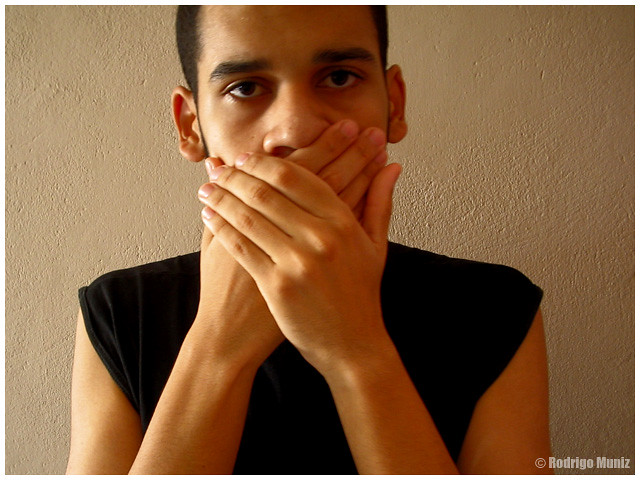
Photo credit: Rodrigo Muniz

Wednesday, September 21, 2011

Do Not Flush!!! Grammar Issues in the Bathroom

While at the Town & Country HCC campus, I was in a hurry to use the restroom during a quick break between teaching classes.  I rushed into the nearest open stall, did my business, and was just about to flush the toilet and step out when I was confronted by this sign on the wall:

DO NOT FLUSH!!!
feminine napkins or tampons

I immediately pulled my hand back, grabbed my purse, and started to leave  the stall before I thought to myself “Wait a minute….that’s gross!” After rereading the sign, I realized what I had missed during my initial glance, but it made me wonder just how many people had left without stopping to question their first reading of the sign.  On top of that, the sign was posted on all 4 walls of each stall and every 2 feet along the sink mirror.  It made me think something truly horrible must have happened the last time someone flushed a pad down the toilet, something along the lines of Godzilla.

I’d hate to have been on the janitorial staff servicing that bathroom.  Forget having to clean the space, just having to use the facilities could be distasteful if I’d been to a stall that someone else had previously used.  Whoever made that sign was responsible for creating the mess. 

In case you’re still confused about why this sign led to miscommunication, there are two problems with it. First of all, the font size used for the directive “DO NOT FLUSH” dwarfs the rest of the message, capturing readers’ attention and blocking or hiding the much smaller words. Secondly, the exclamation points that follow the command stop the reader’s brain from processing the rest of the message because exclamation points indicate the end of a statement by taking the place of periods in exclamatory sentences. 

I love using this anecdote to illustrate to students the need for attention to grammar.  If they were janitors trying to make their work easier by putting up signs for customers, they could potentially be complicating their lives if their signs were badly constructed.   Most students laugh and say they won’t be house-cleaners when they graduate, and I make sure to tell them that I would hope not. I want them to aspire for more in their lives! Not that there’s anything shameful about being a custodian;  I’d challenge anyone to trade places with a stay-at-home mother or manual laborer and not end up exhausted after a hard day’s work.  Manual labor jobs don’t usually provide living wages, though, and I want better for my students than living paycheck to paycheck. 

What I hear quite a bit from students is that they will have jobs where they won’t need to write. People on the lower rungs, like secretaries or assistants, do all the writing, but not nurses/engineers/<insert the career they’re studying for>.  It comes as a shock for many to hear that my mom writes e-mails to other nurses and managers on an almost daily basis, in addition to the notes she has to make on patient charts and signs she posts around the unit.  My father was a civil engineer and he churned out proposals, memos, project reports, and letters around the clock.  There are no “assistants” who do all the writing for the professionals; it saves companies so much money to hire professionals who can do their own writing that it has now become a requirement for succeeding in the work force.

I’m off to visit family in San Antonio! Happy writing ‘till I get  back!

Photo credit: Mirjam van den Berg

Wednesday, July 27, 2011

How to Create a Formal Outline

About a month ago, I promised to follow up my blog post about informal outlines with one about formal outlines.  It’s taken me a while but here is that subsequent blog post.  Never let it be said I am not a woman of my word!

When a teacher or supervisor asks you for a formal outline, she or he is requesting a document that has very specific formatting rules. Some rules will differ according to the kind of project you're working on and any specific instructions given to you, but there are a few general rules you should be aware of that govern all formal outlines.

  • Items should follow logical order.
  • The higher the heading level, the more general the statement.
  • Every “A” must be accompanied by a “B”.
  • Use either sentences or phrases in your outline, but not both.
  • Sentences are followed by periods; phrases are NOT.
  • Items must be in parallel structure.
  • The outline should be consistent.

Items should follow logical order.

First of all, make sure that the content of your outline is logical before you start nitpicking on the format. Do the headings make sense in the order you have placed them?  Are items that are closely related placed together for a more natural flow of ideas?

The higher the heading level, the more general the statement.

Don’t let this rule confuse you.  All this guideline says is to make your subheadings increase in detail with each subsequent level. It’s easier to visualize the rule this way:

I. General statement
     A. More detailed statement
           1. Even more detailed statement

To further clarify the levels of specificity, here is a short example. Notice the increase in the amount of detail supplied the “deeper” the level of the point.  Remember that you need to maintain consistency in the level of specificity you have given each level.  In other words, if this example had a point “B,” it would have to match point “A” in its level of detail.

I. Anime is worth watching.
     A. Anime accurately conveys life truths.
           1.  Bastard demonstrates that bad things can and will happen to good people.
          2. Elfen Leid shows the need to face one's past in order to learn from and move past it.

Every “A” must be accompanied by a “B”.

If the example given for the previous rule were a completed outline, then it would violate this guideline. If there is an "A" in your outline, there must be a "B." The same goes for "I" and "II," "1" and "2," "i" and "ii," and "a" and "b." The reason for this rule is logical: a point cannot be sub-divided into less than two subpoints. To give a main point only one subpoint would be to divide it by one, which results in the same main point, so the subpoint is redundant.

Use either sentences or phrases in your outline, but not both.

As self-explanatory as this rule is, it is one that SO many people forget when writing outlines. Please, please, please do not mix sentences and phrases in your outlines. If your first main point is a complete sentence, then let that format guide the rest of your main points and subpoints. Sometimes your outline instructions will specify that the points be written as phrases or sentences, but usually the choice is left up to you. If you want your work to look professional, make sure you choose to write in either sentences or phrases and then stick to it.

Sentences are followed by periods; phrases are NOT.

Hopefully this rule is also self-explanatory. Making sure you go back and check to make sure you haven't placed a period at the end of any phrases and that all your sentences are followed by periods is one of those final touches that will make your outline look professional. Because outlines are so textually sparse, readers' eyes WILL notice when some lines have periods and others don't.

Items must be in parallel structure.

Parallel structure is, in short, a similar pattern of words. Again, consistency is the key. If you use one form of phrasing your points, then you need to stick to that format for that heading level. This is another rule that is best explained through illustration.

I. Things to do in the summer  
     A. Indoor activities 
           1. video game playing

           2. reading 
     B. Outdoor activities
           1. swimming

           2. surfing 
II. Things to do in the winter
     A. Indoor activities 
           1. video game playing 
           2. reading
     B. Outdoor activities
           1. skiing 
           2. camping

Notice that the heading levels remain in parallel structure. I matches up with the format of II; A matches up with the format of B; 1 matches up with the format of 2.  Since the activities listed in the outline end in –ing, they ALL must end in –ing for that sublevel.  Listing “reading” and then “to play volleyball” as summertime activities would be an error in parallel structure.  This is another area in which you can easily mess up your formal outline without realizing it. Just pay attention to the way you word your main points and subpoints and you should be fine.

The outline should be consistent.

Consistency has been a part of each and every rule thus far, but it's important enough that I wanted to emphasize it one last time. The power of consistency is that it makes your readers comfortable; they know what to expect in the formatting so it fades into the background and they can focus their attention on the content of your outline. If you make an error but make it consistently, sometimes your reader won't even notice! It's when you start changing things constantly that you call attention to how you are writing instead of what you are writing and you divide your reader's attention.

Final words…

Remember that there is no “one size fits all” recipe for creating a formal outline.  The adjustments you make to your outline will depend on the style guide you are using, the industry you are in, and the instructions your professor/boss gives you.  For example, some professors cannot stand to see the words “Introduction” and “Conclusion” on a formal outline, whereas for others it is perfectly acceptable to include those headings.

Photo credit: James Bowe

Monday, June 20, 2011

Personal Character: How It Affects Your Writing

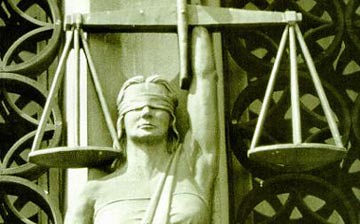
lady justice

Teaching at-risk high school students for the past year was a learning experience for me.  Being faced with difficult circumstances (sometimes outright hostile ones) helped me to grow both as a person and as a writing instructor.  While I won’t disclose the particulars of my students and my interactions, I will impart to you one insight about writing of which this past year made me aware:

Your personal character affects your writing.

I know it may be a hard claim to swallow, but allow me to explain how something so abstract can have a very tangible effect on the words you produce on paper.  In short, writing is made up of an assortment of anecdotes, analogies, comparisons, and examples.   You select their content based on what you know (i.e., your background) and what you value (i.e., your character).

What You Know

People write about what they know and so much of the content that you create is based on your personal background.  There’s not much that you can do to control that. Being more aware of what the anecdotes and comparisons you use reveal about your socioeconomic background can empower you, though, to make sure that you

  1. reveal only as much of your personal history as you are comfortable revealing to your audience and
  2. make sure to choose examples that come from your audience’s personal experience, not yours.

Let’s look at how a comment on the weather can reveal much about your background.  It’s summer time now in Houston and  the heat is in full swing.  Since Houston is relatively close to the coast, it’s not only unbearably hot in the summer, it’s also humid.  If you write

“The humidity level in Houston makes it feel like one giant laundromat,”
you’ve revealed to your reader that you are familiar with what the inside of a washateria feels like.  Depending on who the target audience of  your paper is, your reader may not have ever set foot inside a laundromat personally and may or may not be coming to assumptions about your income level based on the fact that you have

What You Value

While there is nothing you can do to change your background, you CAN change your character.  Your “character” is the sum of moral or ethical qualities that make you the person you are.  If you haven’t considered how your personal values can seep into your writing, you need to read the following paragraph.

The essays my students turned in to me this past year revealed more than just their writing ability; they revealed their very moral fibres.  For example, after Christmas break I asked students to write about what they did over the holiday.  One student wrote that she would have gone clubbing with her boyfriend, but she had to stay home and watch her baby.  While that in and of itself didn’t reveal much, the sentence she wrote afterwards did: “My baby cramps my style."  Another girl wrote about how jealous she felt that her baby received more Christmas presents than she did.  When answering an essay prompt asking about how best to spend lottery winnings, only two students wrote that they would give it all to their parents so that they could pay the bills and buy food. 

While it is obvious what character flaws and strengths my students’ writing revealed about them (at least I hope it’s as obvious to you as it is to me), your writing is equally as telling even if you’re not writing a personal narrative.  The examples you choose to illustrate a hard day’s work convey your work ethic; the comparisons you make in an essay to describe beauty reveal what you value aesthetically.   Yes,  while what makes up a desirable “character” is very subjective, there are certain aspects that are universal.  Make sure that nothing you write indicates to your audience that you would be willing to compromise your integrity. 

How to Build Your Character

Building your character is something that you can do yourself.  Characters are developed during childhood, it’s true, but there is nothing that prevents a person from evaluating themselves morally  as an adult and implementing steps to work on areas that need improvement.

Look at the self-help aisle in your bookstore, subscribe to self-improvement podcasts, attend meditation and/or yoga classes, listen to upbeat music, go to local conferences or seminars, and spend time with people you admire. 

One poem that deals directly with defining what a good “character” is is “If” by Rudyard Kipling.  My father knew it by heart and would recite parts of it at random to my sister and me.  I have yet to run into another person who has even heard of the poem, much less read it. This poem needs more exposure, especially considering how morally blind society is. Print it out and pin it to your corkboard at work, tape it to your bathroom mirror, or frame it and hang it on the living room wall. 

“If” by Rudyard Kipling

If you can keep your head when all about you  
    Are losing theirs and blaming it on you,  
If you can trust yourself when all men doubt you,
    But make allowance for their doubting too;  
If you can wait and not be tired by waiting,
    Or being lied about, don’t deal in lies,
Or being hated, don’t give way to hating,
    And yet don’t look too good, nor talk too wise:

If you can dream—and not make dreams your master;  
    If you can think—and not make thoughts your aim;  
If you can meet with Triumph and Disaster
    And treat those two impostors just the same;  
If you can bear to hear the truth you’ve spoken
    Twisted by knaves to make a trap for fools,
Or watch the things you gave your life to, broken,
    And stoop and build ’em up with worn-out tools:

If you can make one heap of all your winnings
    And risk it on one turn of pitch-and-toss,
And lose, and start again at your beginnings
    And never breathe a word about your loss;
If you can force your heart and nerve and sinew
    To serve your turn long after they are gone,  
And so hold on when there is nothing in you
    Except the Will which says to them: ‘Hold on!’

If you can talk with crowds and keep your virtue,  
    Or walk with Kings—nor lose the common touch,
If neither foes nor loving friends can hurt you,
    If all men count with you, but none too much;
If you can fill the unforgiving minute
    With sixty seconds’ worth of distance run,  
Yours is the Earth and everything that’s in it,  
    And—which is more—you’ll be a Man, my son!

Developing one’s moral rectitude isn’t something widely talked about.  All you have to do is turn on the news to see evidence of how lacking we are in ethics as a society.  Hopefully this post will make you stop and reflect on who you are as a person and if you’re happy with yourself.   It’s a reflection we all need to make at various points in our life so we can make adjustments if necessary and keep improving ourselves. I’d like to think that I made my students stop and think about what values they wanted to prioritize in their lives and that they made changes for the better.

People are judged by their writing more than society cares to admit.  Nowadays, bad writing, lack of style or imagination, or sloppy content can get you fired or cost you a promotion because it reflects badly on your ability to communicate coherently and appropriately.  While grammar is emphasized in schools, don’t forget that the content of your writing is just as important.res


Photo credit: vaXzine

Tuesday, June 7, 2011

How to Write an Essay FAST

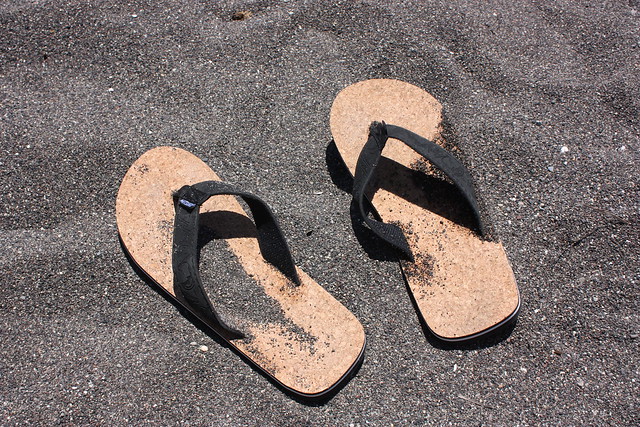
Sandals in the sand.

Summer is here! Summer’s arrival brings with it beaches, swimsuits, ice-cream, barbeques….and summer school.  Summer school is a great way to get ahead educationally and complete credits you wouldn’t normally have time to take. 

But as great as summer school is for your transcript, be aware that (at least on the college level) it’s still a grueling month of work where you are given 1/3 the time (or less) that you receive in a regular semester to complete one or more essays…. essays that needs to be as thoughtful and well supported as ones written during a regular semester.

When you have to write an essay quickly, you need to approach the writing process a little bit differently.  Time is of the essence and you just don’t have the time to fiddle with different approaches to your essay until you find the one you like best.  Here are my tips for writing an essay FAST:

1. Skip the Introduction

How many hours have I and others like me spent staring at that blinking cursor waiting for brilliance to strike? So many students have approached me the day before an essay is due and told me “If I could just get started, I’d be fine. I really just need help starting the essay.” Time is a luxury you don’t have, so skip agonizing over the perfect way to begin your essay and get straight to writing the thesis statement

2. Write Your Main Points

Now that you have a thesis statement, you can get to the meat and potatoes of your essay: supporting that statement.  Try to come up with at least 3 main points; that’s enough to get you decent coverage.  If you only have 2 main points, they had better be thorough and solid.  Because if one of those two points is weak, then your professor will dock you for having only one main point to carry your entire paper – In other words, you put all your eggs in one basket.

3. SUPPORT Your Main Points

If you recall, there are 4 types of evidence.  Choose at least 2 types per main point.  If you’re trying to hit a certain  number of pages: the more types of evidence you have supporting each main point, the longer the essay.

4. Choose an Intro and Conclusion

Now that the body of your paper is finished, you can go back and plug in an introduction and conclusion.  If you have the time, you can try to come up with the perfect beginning sentence that will herald brilliance.  Chances are, though, you’re out of time and need something that will introduce your topic and provide filler.  What I suggest is just randomly choosing one of the 7 introductory techniques available.  Each technique will get the job done, so it doesn’t necessarily matter which one you choose.  Sure, some will fit your topic better than others, but at this stage in the game, you simply don’t have the time to try each one on and see which fits best.  Make absolutely sure that whichever technique you use in your introduction you REPEAT it in your conclusion. 

5. Proofread Your Essay

I cannot stress the importance of this last step enough.  Most students will consider their work done the moment their essay is written and they will turn it in as is.  Proofreading your paper does NOT take that much time and can be the difference between making a passing and failing grade.  Yes, your paper was written in a rush and may be a tad short of brilliant, but your teacher doesn’t know that.  Present your paper in the proper format and with as few grammatical mistakes as possible so that it LOOKS like an A paper, even if it isn’t.  There’s a very good chance that your teacher has stacks of papers s/he needs to grade and a very limited amount of time to do it.  Summer school isn’t just hard on students; teachers suffer their way through it too.  You don’t want to give away any advantage you have so the little bit of time it takes to make sure your paper is clean-cut and pretty is well worth the potential pay-off if your teacher is running behind on grading.

Really, the FASTEST way to write an essay is to plagiarize it, but you’ve already seen the reasons that road is a bad one to take.  My proposed method for getting an essay written in a minimal amount of time still requires work – that’s something you just can’t avoid.  Hopefully breaking the steps down for you will cut down on the amount of work you do have to do and help you get through each essay as painlessly as possible.

Good luck and don’t forget to take some time to hit the beach and catch some sun – it IS summer time, after all :).

Photo credit: Klearchos

Monday, February 21, 2011

Write for a Specific Audience

Writing with an awareness of audience is conceptually an easy idea to understand.  Most people understand that when writing a children’s book, swear words and sexual innuendo should be avoided.  Likewise, most people realize that slang has no place in a formal business letter.  It’s not hard to see that the reader you are writing for dictates the way you will present your content.

The hard part comes in remembering to write for a target audience as you compose your work.

As a teacher who uses repetition to help important concepts stick in students’ minds, I would like to draw your attention to Eric Cumming’s guest post “The Second Golden Rule of Writing” on the blog Write to Done.  Cummings’ message is clear and to the point: write for your reader(s).  Combined with his first golden rule of writing (i.e., intend every word you write), these two rules address an awareness of the choices an author makes when writing that I wish more of my students had.

Photo credit: Batmoo

Saturday, September 4, 2010

7 Techniques That Make Writing Introductions a Piece of Cake

Sign stating start here.

One of the hardest parts of writing an essay (of writing anything, actually) is coming up with an introduction.  That’s due in large part to just how important an introduction is to a paper.  That first paragraph has to be so provocative, so interesting, so utterly riveting that your readers will all but fall over themselves to finish reading the rest of the essay. 

With pressure like that, it’s no wonder introductions are put off by writers until the very end, the last paragraph to grace the page and usually the most disappointing.   That they are less than stellar is also not a surprise considering that by the time you’ve finished writing the rest of the essay, you’re too drained and sick of your paper to be able to come up with something creative for the beginning.

Knowing how to write your introduction would significantly ease the burden on your brain when it does come time to write that last paragraph.  I wish I could claim credit for sitting down and making a list of all the introductory techniques possible when it comes to writing an essay, but that claim to fame belongs to Judy Hilliard from San José State University.  In 2006 Ms. Hilliard wrote and published a brilliant writing handout titled “Completing the Essay.”  However, if you clicked on the link to that handout, you’d see that it is no longer available. 

Luckily for you, when I first ran across the handout I printed it out and to this day I still have the hard copy of it.  I was going to reproduce it here on my blog after requesting permission from Ms. Hilliard, but after running a search on Google for a few choice phrases from the handout, it appears that someone else has already beaten me to the punch. 

Since I’m not greedy when it comes to internet traffic (I don’t care WHERE you get help for your writing, just that you do and that it is quality information), I am going to link to Dr. Hobbs’ reproduction of the handout.  You can find it here on his blog post titled “Composition – Lead Ins that Hook Your Audience.”

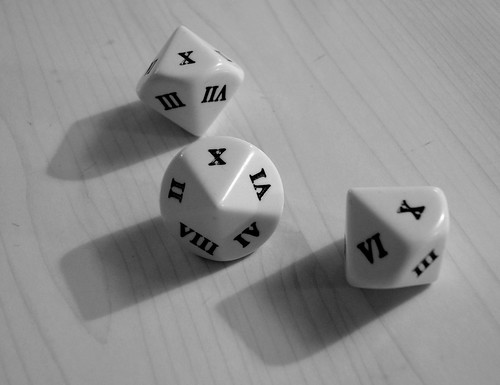
Please, please, please take a look at that handout.  It lists a total of 7 different techniques you can use for starting any writing project; it even includes an example of each technique so that you know exactly what each technique looks like in writing.  This handout makes deciding how to begin an essay so easy that, when it comes down to it, you could literally just roll a dice to see which technique you’ll be using for each assignment. 

I will be distributing the hard copy of this handout this year to my students, like I do every year, and I can only hope they’ll recognize its value and hold on to it for years and years to come, the way I have. 

Saturday, March 27, 2010

Punctuation Within Dialogue

I recently had a reader write me with a question about writing dialogue.  She had read my post about punctuating titles and wanted to know if titles are still punctuated in creative writing when they occur as part of a character’s dialogue.

The more I searched online for a definitive answer to her question, the more frustrated I became at the lack of information available.  That frustration has led me to post my response to her e-mail online.  I’m not an expert when it comes to creative writing, but maybe the little that I do know will help someone else out there with the same question.  At the very least, it lets other confused writers know that they are not alone in their confusion. 

I know my blog doesn’t have that big of an audience, but my other hope is that someone who IS an expert will stumble upon this post and either confirm my conclusions or correct them.  One little post on an obscure blog doesn’t feel like much, but hopefully it will make a difference for someone.

The Question

Hi Carmen,
I know that I would italicize Grey's Anatomy (TV show) but here's my question---do you italicize it within a quote? I'm wondering if that might look kind of goofy or pretentious or something. Here's the quote:


I’d never been inside a hospital before – well, besides the day I was born.  Looking around, as I waited for surgery, I saw a white board with my name written on it.  “Hey,” I told the orderly. “It’s just like ‘Grey’s Anatomy!’”

I put in quotations within quotations--but maybe that also looks goofy. Let me know what you think--thank you---J. F.

The Answer

Hi J.F.,
Sorry it's taken me two days to get back to you; I've been grading essays and working on homework for my own classes. I thought I'd check this e-mail account to give me a mental break.  Ha! Talk about a difficult question!


All kidding aside, I'm glad you wrote me.  I enjoy challenges and your question definitely presents one.  It turns out there are no set rules regarding how to punctuate words within dialogue.  Dialogue is actually one of the areas where authors have the most freedom in deciding whether or not they want to adhere to the standard rules of grammar; because that freedom is limited to characters' speech, no one questions whether or not the author knows how to use spaces or apostrophes correctly when they see something like "ohmygodohmygodohmygod" or "Imma gunna do ya in, boy!"  You can technically do whatever you like without fear of formal rebuke (one or two readers may be convinced you're "wrong," but the lack of prescribed rules for dialogue makes that an impossible call for anyone to make). 


That said, grammar has always been determined by seeing what the majority of other people are doing and then following their example (at least in English).  An example of that is the serial comma - I was taught in grade school that "I will buy bacon, eggs, and ham" has a comma before "and"; if you check grammar books nowadays, that comma is optional (if they bother to mention it at all).  Soooo.... I ran a search on Google to see if I could see how others were punctuating titles in their dialogue. 


I first searched to see if there were any prescribed rules for punctuating dialogue and found sites like the following: http://www.helium.com/items/1744137-how-to-punctuate-dialogue, http://www.writing-world.com/fiction/dialogue.shtml, and http://fictionwriting.about.com/od/writingexercises/qt/punctuation.htm.  None of them discuss punctuation as it occurs WITHIN dialogue (especially as it applies to titles), just how to properly indicate that a character has commenced speaking.  The lack of resources should ease your mind a little that you won't be breaking any rules however you choose to punctuate the sentence.


The next search I ran was one that included various television show titles in an open-ended sentence to see if I could find any examples of dialogue in action.  Unfortunately, I didn't get any results that showed how other authors have chosen how to deal with your problem.  What I got were a lot of blog entries and reviews discussing how great such and such a show is (usually punctuated incorrectly). 


My best advice would be for you to write different versions of the sentence (one punctuated "correctly" and the other with the title lacking any punctuation) and ask a random assortment of friends which one they would prefer if they came across it in print.  I'm going to go ahead and guess that the majority of people would choose the un-punctuated title - most likely because we don't speak using formal punctuation.


Ultimately, the decision is yours.  I know that's not a very satisfying answer and I wish I could give you something more concrete.  I'm by no means an expert on writing (You actually don't NEED to be an expert - you just need to be famous enough that anything you write is emulated, regardless of how "wrong" it is - but I digress), but if I were trying to write a similar sentence for my own character, I would leave the television show un-punctuated (except for the capital letters in the title).  Italicizing it or putting it in quotation marks, for me, just looks off and, yes, maybe even a little bit like showing off.


For what it's worth, I've asked the question on my Twitter account, but I don't have a large enough following to get a good number of responses from which to draw a definitive conclusion. I'll let you know what answers I get (if any). Oh! And I can ask my students this week! They're barely college-educated (freshmen) community college students (which means their ages range considerably), so hopefully they represent the literary tastes of the majority of Americans (well, Southern ones, at any rate). 


Thanks for the great question! Today began as just another boring day, but now it's filled with grammatical possibilities!
Carmen

Update on Class “Experiment”

This was a bad week to get results, it turns out, because quite a few students were AWOL (probably having extended Spring Breaks).  I asked the few that did show up to "forget" what we learned in class regarding punctuating titles and to vote on one of two examples of dialogue I put on the projector based on which one they'd prefer to see if reading a novel.  The dialogue was a rather silly example:


Jane said "I love Gray's Anatomy. The doctors are so HOT!"
Julie squealed when she heard Jane's comment. "Ohmygaw! I love that show too!"


The dialogues I put up were identical except for the punctuation of the title of the t.v. show (I italicized it in one).  A total of 31 students said they preferred it without any punctuation (plain text) and 14 voted in favor of the italicized title.  Those numbers look significant, but in one class the votes were split 9 in favor of plain text and 7 in favor of italicization - so I wouldn't put too much stock in the results.

For what it’s worth, I'm going to stick with my initial advice and say that people prefer dialogue to directly reflect speech and to be "plain."

Photo credit: Kris Hoet

Wednesday, March 10, 2010

Titles: When to Italicize, Underline, or Use Quotation Marks

Titles are everywhere; we need them in order to be able to refer to any of the countless stories, pictures, blogs, movies, books, songs, and other works of art being created every single day.   Since most writing is about things you’ve experienced- things you’ve read, seen, heard, or touched – chances are very high that you will be including a title of something one day in your writing.

Before that happens, though, you need to know the rules that govern how to correctly write titles.  And when I say “titles,” I’m not referring to forms of addressing people.  Although I’m sure there are specific rules of etiquette that govern when to call someone “Miss” or “Ms.,” the rules I will be describing in this post apply to works of art, like books and music.

When it comes to titles, you can either italicize them or put them in quotation marks.  The 7th edition of the MLA Handbook eliminates underlining (underlining is still acceptable when hand-writing papers). Skip to the end of this post to see a note about underlining titles.  Keeping the rules for italicizing and using quotation marks straight isn’t easy, which is why there are different techniques that make remembering when to do what easier.

Big Things and Little Things

One way of looking at titles is to determine if it belongs to something that is big or something that is little.  A big thing is something that contains little things.  For example, a CD album contains many songs.  A book contains many chapters.  An anthology contains many essays or stories.  A web site contains many web pages.  A TV series contains many episodes. You get the point. 

Once you’ve determined if the title you’re trying to punctuate belongs to a big thing or a little thing, you can punctuate it.  The titles of big things are always italicized, while the titles of little things are placed within quotation marks.  The following are some examples of properly punctuated titles:

  • Words Fail Me is a book with a chapter “Are Your Eggs Ready to Hatch?”
  • The first episode of first season of the British television series Black Books is called “Cooking the Books.”
  • “Head Over Feet” is a song on Alanis Morissette’s third studio album Jagged Little Pill.

As nice as the “big things/little things” trick is for remembering how to punctuate titles, it stops working when it encounters more complex collections of art.  For example, how do you punctuate the titles of the plays you bought in a book called The Collected Plays of William Shakespeare? Are they considered chapters? They are little things inside of a bigger book, after all.  What about Beowulf?  It’s a poem, which is a little thing, but the MLA Handbook says that poems which are “long” need to be italicized.  What exactly does “long” mean and how are you going to remember to include those poems in with big things?

Don’t toss the towel in yet on this whole punctuating titles business – I’ve come up with a different way to remember whether or not to italicize or put a title in quotation marks.

Can You Buy It?

If you can go out and physically buy a copy of whatever title it is you’re trying to punctuate, italicize it.  If you can’t, put it in quotation marks. 

Since you can go to Barnes and Noble and find Beowulf on the shelves, it gets italicized.  The same can be said about each one of Shakespeare’s plays; you can find them in one large collected works book OR you can find them sold individually.  What you can’t do is drop by Blockbuster and try to rent ONLY the one episode of Lost you missedYou have to rent the DVD that has several episodes on it, one of which being the episode you missed.  Therefore, you put episode titles of television series in quotation marks. 

This idea even works for web sites and web pages.  When you buy a domain, you’re buying only up to the first .com or .org or .info (or whatever extension you chose).  So only that much of a web site gets italicized (For example, GuildWars.com or Writing Simplified). Anything after the first extension is a sub page on the web site, and gets placed inside of quotation marks (For example, the “About Me” section of my blog or any one of the titles of my individual blog posts). 

Even this trick for remembering how to punctuate titles breaks down, though.  You can buy singles of songs and there are entire works of fiction put online for free all the time.  Taken in conjunction with the “big things/little things” technique, the “Can you buy it?” trick should help you get through punctuating at least 98% of every title you’ll encounter successfully. 

For the other 2% of titles you encounter and don’t know what to do with, well, that’s what I’m here for.  Use your professor! Don’t feel embarrassed about asking when you’re unsure about how to do something.  Chances are, your teacher won’t know the answer off the top of his/her head either and will learn something in the process of looking it up for you. 

Names of Forms, Games, Restaurants, Etc.

Style guides like those published by the Modern Language Association (MLA) and the American Psychological Association (APA) are great sources to turn to when you need to know how to punctuate something properly for a paper. But if you’re not writing an academic paper or your writing includes topics that aren’t typically found in professional publications, they won’t provide you with the answers you need. For those issues, you have to rely on your own judgment in applying the rules because an official standard hasn’t been set.

  • Names of Forms: It’s rare for someone to cite a blank document (i.e., an unfilled-out form) so examples of this in published peer-reviewed literature are scarce. However, webpages and print documents refer to form titles when indicating that such and such a form needs to be filled out, or explaining the purpose of certain forms. Every single instance that I've seen so far simply capitalizes the first letter of each word in the form title. For example: "Fill out the Motor Vehicle Records Form to request information about a particular vehicle involved in an accident," "If you are employed in the US, you must fill out a W-4 Form," and "Make sure to fill out all shaded areas in Form I-765." Also notice that the word “Form” is in every name.
  • Names of Restaurants: I still remember when it was natural to go to a bookstore to pick up a restaurant guide.  Nowadays, you turn to the Internet for restaurant reviews and suggestions, so finding a print standard for how to punctuate the title is difficult.  As far as the online standard goes, you have the choice to either 1) capitalize the first letter of each word in the restaurant’s name or 2) italicize (or underline!) the restaurant’s name.  You would never put the name in quotation marks, though. As the restaurant is the “big” thing that includes “smaller” things like menu choices, you would put the names of dishes in quotation marks, unless it’s a general food item that’s well known. For example, “Have you been to Chili’s? I love their chicken parmesan,” or “I’ll see you at Hula Hut. Don’t forget to order me the ‘Funky Dunky Onion Strings’.” Both examples show acceptable ways to punctuate.
  • Names of Games: Since the games themselves are the "big" thing that include smaller components, I would italicize their titles.  For example, Magic: the Gathering is a card game similar in playing style to Pokemon Trading Card Game.  I did run a quick search through a research database to see how peer-reviewed journal articles treat game titles as games are a popular topic of education-related journals. The articles I found only capitalized the first letter of each word in the game's name without italicizing or underlining it.  However, no article ever placed the game's name inside quotation marks.  With that evidence, I'd say it's a matter of personal preference whether to italicize the name or leave it unembellished.  I personally prefer the italics since it's what the rule would call for.
  • Etc.: Use your personal judgment in applying the rules or drop me a line (in a comment or an e-mail). I’ll update this list with more troublesome title issues as I’m made aware of them.

A Note About Underlining Titles

Before the advent of computers and word-processing programs, there were only two options available to you when punctuating a title: underlining or quotation marks. When computers starting to become more commonplace, a third option - italicization - was added as an alternative to underlining.

Underlining titles was viewed as necessary only when handwriting titles because it is difficult to italicize one's own handwriting - especially if you're writing in cursive. Many style manuals now omit underlining as an option, stating that computers are accessible to the majority of people living in today's society and underlining is no longer needed.

However, there ARE a couple of situations that still exist where italics is either not supported or redundant:

  • Social Media: Some social applications online (e.g., Facebook) do not support embedded HTML code, which means when adding comments you do not have the option of italicizing your font.
  • Italicized Fonts: If you enjoy using fonts other than the default Times New Roman or Calibri, you may run across lovely fonts that mimic cursive handwriting. Although it is possible to italicize those fonts even more, the difference between regular and italicized versions of the font is often imperceptible and could confuse your reader.

When you find yourself in a situation where italicizing your font is simply not an option, surround the words you want underlined with underline dashes (Shift + the dash key).  For example, I am reworking my father’s book _Dan, A Man Without Youth_ while concurrently working on my own book, tentatively titled _Online Tools for Writers_.

Good luck with your writing endeavors! If you have any questions about how to go about punctuating titles or getting around the character limitations of online programs, send them my way and I’ll do my best to answer them.

Photo credit: Lutrus

Wednesday, February 3, 2010

Literacy Essay

This week’s post will be a little bit different from my usual fare.  Instead of writing about or using other authors’ works as examples of good writing, I’ll be using my own. 

The following essay was an assignment I had to complete for my graduate Composition class.  Despite it being an academic paper, it lacks a thesis statement because it is a narrative essay (one of the only academic essay types informal enough to allow for implicit theses statements).   Unfortunately, narrative essays aren’t standard assignments in most college classrooms.

Rather than using the essay as an example of how to format an academic paper (e.g., clear introduction with thesis statement, topic sentences beginning each paragraph, etc.), use it as an example of clarity of purpose.  If you can give your essay to someone and they can tell you what you were supposed to write about without ever having seen your original essay prompt, then you have succeeded in answering the prompt.  (That doesn’t necessarily mean you FULLY answered the prompt, just that you stayed on topic.)

The essay is also an example of how the writing process is ever ongoing.  I didn’t submit this assignment because I was done writing it; I submitted it because the deadline had come.  There are still quite a few parts of the essay that I’m dissatisfied with, so many changes I’d make if I still had the time.  All these years in college and I’m still learning that the goal is not to be perfect – it’s to do the best you possibly can within the time frame that was given to you.

------------------------------------------------------------------------------------------

A Life Spent Reading: The Development of One Composition Instructor's Classroom Goals


Some of my earliest memories include my grandfather sitting me on his knee and teaching me how to read Spanish from Coquito1. I still have that book in my bookshelf. Its pages are yellowed and tattered now, the print difficult to read, but the words have lost none of their meaning. My grandfather's visits were few and far between, however. But fortunately for me, he was not the only one in my family who encouraged reading.

My father had me reading the classics as soon as I was able to hold a book in my hands. An intellectual who had served seventeen years in concentration camps during the Bolshevik invasion of Romania, he understood just how powerful and liberating the written word could be. He had me reading Dickens, Hardy, and Dostoyevsky all before I passed the age of 8. Much of what I read was too advanced for my understanding of the world at the time, but I would never call the exercise of reading the works wasteful. Because of my admiration for my father and his high estimation of learning, I wanted to read more, to be more cultured, so I could please him. After a while, I read to please myself.

I devoured literature. Growing up, I read all the time: before school, in between classes, during classes, and after school. I'd often stay up the entire night reading. I remember stuffing towels under my bedroom door to keep the light from giving me away; when the bits of towel poking out from under the door aroused my parents' suspicions, I switched to reading under my comforter with a flashlight. As much as I read, I'm surprised I found the time to do anything else besides homework. Somehow, though, I managed to find the time to write.

I started writing recreationally in 6th grade. My English teacher at the time, Mrs. Graves, would assign a set of vocabulary words that each had to be used in a sentence. Being the overachiever I was, I would spend the class period writing a story that used the vocabulary words instead of discrete sentences. I still remember how proud I was of all the praise I received from Mrs. Graves when I turned in the assignment. I enjoyed the attention so much, I wanted more of it and so every vocabulary assignment thereafter was a new story filled with drama, intrigue, and lexical variety.

I continued to write until I started college. Its demands on my time were such that free time for writing was a luxury I did not have. My life up to that point prepared me so that when I entered college, I entered it secure in the knowledge that I was a literate person, able to take on the reading and writing tasks that would be asked of me. That is not the reality that many people face when entering college, unfortunately. They must take the classes I placed out of to bring their literacy up to the college level. Since I plan on teaching those classes, it behooves me to take a closer look at what literacy is and how it is developed.

Literacy as it relates to the written word involves engaging with the written word on multiple levels. A person must be able to read a string of letters and understand the meaning that particular string creates. This comprehension of meaning is essential to the meaning of literacy; without it, you are left with someone who has learned to do nothing more than parrot the sound associated with each letter. The person has learned only the phonetic meaning of each letter, not its semantic meaning. When I read Japanese, I am an example of such half-accomplished literacy. I can sound out each grapheme2, but I have absolutely no idea what the final product means. I know that ごうじ is pronounced go-u-ji, but as to what it means (if anything), I haven't a clue.

Literacy involves more than just being able to read a string of letters and understand its meaning, however. A literate person must also be able to recreate those letters from memory and string them along in such a way that meaning is conveyed accurately and efficiently. This ability to write is just as essential to the definition of literacy as the ability to read is. Without it, a person's freedom is impinged upon; a person is left exposed to realities created by others without having the ability to refute them, much less the ability to create a new one. A person without the ability to write is nothing more than an answering machine – a receiver of messages without the power to create his own recorded message.

As disparate as the skills are, they are both necessary for the full definition of “literacy” to be realized. Society expects a person who is able to read proficiently to also be able to write proficiently. It is this latter skill that my students believe they need to improve. While they are correct in that regard, almost all my students lack the critical thinking skills required to read a piece of literature and see beyond the surface meaning of the words on the page. My title is “instructor of English composition,” but I really teach students how to write and read.

Just because students enroll in my classes so that I can teach them composition in no way entails that they want to learn the subject. Half of my students have convinced themselves that they are just no good at writing and shouldn't bother trying to be, resigning themselves to a semester of boring essays they'd rather not have to write. The other half is petrified of failing the class, certain they cannot possibly improve their writing skills enough to make a difference. Neither half usually likes reading.

If my childhood experiences with literature have taught me anything, it is that not only is reading a necessary component of writing well, it must also be of literature that is well written. In much the same way my father encouraged me to read the classics, students have to learn to be discerning of the quality of the literature they read in order to reap the greatest benefits from it. I don't yet know how to impart that sense of a work's literary merit to my students, but it is definitely something that I would like to include in my lessons.

Improvement takes longer than a semester to appear and, realistically, is a process that will last the entirety of a student's life. In order for that to happen, though, that student needs to continue to read even after concluding my class. The only realistic way for that to happen is if the student developed a love of literature. I want to pass on my love of reading to students, to help them discover that it can be an enjoyable activity.

In addition to passing on my love of literature, I want to pass on my enjoyment of writing to my students. I want my students to want to write, not to feel forced to do so just to fulfill a course requirement. Each negative experience students have with writing only serves to more deeply ingrain in them their dislike of the activity. I don't expect my students to become recreational writers in their spare time, but I do want them to leave my class having written at least one essay they looked forward to and enjoyed writing.

I am far from being an expert in the field, but what I lack in knowledge I make up for with enthusiasm for my job. Personal experience has taught me that reading and writing can become enjoyable activities to people who are encouraged at every step of the way. I want to be an instructor that my students respect enough to want to please, the way I wanted to please the people in my life who taught me the value of words. Seasoned with that desire and ladling out heaping servings of praise with my criticisms, I want to help my students achieve the full definition of literacy.

Notes

1Zapata-Santillana, Everardo. Coquito Clasico: Lectura Inicial. Ediciones Coquito USA.

2 I use “grapheme” instead of “letter” as Japanese does not have a one-to-one phoneme-to-written symbol correspondence with the written form of its language

Photo credit: Wyoming Jackrabbit

Monday, November 2, 2009

The Importance of Taking Notes

For some reason, college students (at least the ones in my class) don’t seem to be taking notes anymore.  I could go on for pages about how self-defeating not taking notes in class is, but I’m more concerned with the reasons for WHY students don’t feel the need to take notes.

Some people, I believe, think they will remember what is being said in class without having to write it down.  I should probably include a discussion one of these days in class about what memory is and how memories are made.  Not many people fully understand that a memory needs to be reinforced in order for it to be stored long-term.

Perhaps students don’t think this skill is directly applicable to “real life” work.  I hate to burst their bubbles, but…

Taking notes is as important out of the classroom as it is in it.


Employers do not want to have to repeat themselves every time you need to do a complex task just because you’re too lazy to write the instructions down.  Taking note of important procedures and routine tasks is a mark of an efficient, hard-working employee.  When I worked as a secretary for a (very) small business, I had to use Quicken to create invoices, enter billing information, and update the inventory – all things I had never done before.  I wrote down step by step instructions for how to do each task and pasted them all on the wall by my desk so that I wouldn’t have to bother my boss for help each time I needed to enter something into the computer.  Not only was he impressed, he said that no previous secretary had ever done that before. 

The very thing that made me look hard-working actually made my job SO much easier.  I completed tasks much faster than when I first started out and had to try to recall the different procedural steps by memory.  Even if you have no desire to appear assiduous, taking notes makes your life easier – something I’m sure you can appreciate.

What? Your job doesn’t require any complex procedures, you say? Take notes at meetings, then.  Not because you’ll be quizzed on the materials, but because you’ll appear attentive and interested.  Getting ahead in the “real world” very often depends on who you know and who you make an impression on.  Being able to discuss meeting points with a supervisor while you’re hanging out by the water cooler is an opportunity to shine that you don’t want to miss. 

Ultimately, I’d like you to take notes not for appearance’s sake, but because you’re honestly interested by points other people make.  If you’ve ever been to a convention (scholarly or not), you’ll have seen people taking careful notes during panel discussions.  Again, there is no test at the end of the convention that all attendees must pass.  They’re taking notes because they have a real interest in the topic of discussion and want to be able to remember things that were said and/or look up resources mentioned on their own. 

Photo credit: HawkExpress

Sunday, October 4, 2009

The Power of an Analogy

Analogies can be very powerful things.  They are, after all, one of the four basic types of evidence.  They can provide support for a main point all on their own.  It’s important to keep one thing in mind:

With great power comes great responsibility.


To properly understand how analogies can be abused, we have to look back to the definition of an analogy.  SIL International has the following to say about analogies:

An analogy is a comparison of certain similarities between things which are otherwise unlike.

The important part to remember is that there must be some similarity between the two (or more) things, places, or people you are comparing, or the analogy falls apart.

For example, it’s not uncommon to hear jicama called the apple of Latin America.  That’s because jícama is similar to apples in texture, shape, and taste.  If someone were to call it the banana of Latin America…well, then there’d be a problem with the analogy.  Although a banana and a jícama do have a shared similarity – they both taste like fruit – that’s where the similarities end. 

When you try to link two things that aren’t similar enough to be linked, you’ve done more than just abuse the power of an analogy; you’ve committed a logical fallacy.  This fallacy is called a “weak analogy.”

When it comes to analogies, there is no “right” or “wrong” because, if you search hard enough, some kind of similarity can be found between two things that link them – even if it’s something as remote as “they’re both made of atoms.” 

Analogies are weighed on a scale of weak to strong.  Because of this leeway, analogies can be abused.  One such example of a comparison stretched to its limits comes from Orly Taitz, a staunch supporter of the Birther movement.  In several interviews on and off t.v., she has compared the Obama administration to Nazi Germany.  She even said that “We are getting another Stalin” when commenting on Obama’s presidency.  Here’s a link to the interview she gave on the Colbert Report: Orly Taitz on the Colbert Report

You can either like or dislike Obama, but compare him to a man who organized the deaths of millions of people as he “purged” his country of dissenters?  Wow. 

The following Doonesbury cartoon is an example of what happens when people notice how ridiculously weak your analogies are:

Doonesbury Sep 27 

So next time you think about using an analogy, make sure that the similarities that exist between the two items are strong, otherwise you might end up being made fun of in the Sunday comics. 

Photo credit: RiptheSkull

Friday, September 4, 2009

Fear of the Blank Page

How many of you have trouble getting started on a writing project?  I certainly do.  The project doesn’t have to be something as hard as an academic essay, either; it could be something as seemingly simple as writing a letter to your grandparent.  The act of creating something out of nothing seems more the province of God, not mortals, but it’s an act we engage in every time we sit down to write with a blank page staring back at us.

Facing all of that whiteness can be intimidating.  If you’re using a computer to write, the blinking cursor doesn’t help any; if anything, it seems impatient for input, like it doesn’t have the time to wait for you to think up something good.  That kind of pressure just makes it all the more difficult to get started.

As if that weren’t bad enough, when you DO manage to get something written, it has to be strong enough to withstand the scrutiny that comes from standing alone.  Even the most solid sentence starts to sound questionable when it’s the only sentence on the page. 

If you (like me) fear the blank page, don’t worry - you’re not alone.  Most of my students find it hard to start writing an essay from scratch, too.  I’d venture to say your reaction is abnormal if you don’t approach a blank page with at least a little bit of trepidation.

Tips for Getting Over the Fear

Most people resign themselves to waging war with the blank page every single time they have to start a new writing project from scratch. There are actually some things that can be done to counteract the fear, though.

For starters, write an outline.    Not only are they great for setting up a well organized paper, but if you start writing your paper INSIDE the outline, you’re not facing a blank page at the onset.   When you finish your paper, just remember to go back and delete the parts of your outline that you wrote around (e.g. “I. Introduction” ).   This is my personal choice when it comes to writing and I use it for everything from writing cover letters to writing short stories. 

Another tactic is to copy and paste “dummy text” into the document to fool yourself into thinking you’ve already made progress and aren’t starting from square one.  I learned about this trick when I was reading a famous author’s blog (I wish I could remember which author it was so I could give him/her credit for the idea).  The author would copy and paste random parts of the U.S. Constitution into a document to get over facing the blank page.  Almost any text will do, really.  Just don’t forget to go back and delete it once you make headway on your paper!

Hopefully these tips will help you spend less time staring at a blank page and more time actually writing.  As always, e-mail me or post a comment if you have a writing tip to share that works for you. 

Photo credit: Rennett Stowe

Wednesday, August 5, 2009

One Word + 60 Seconds

Not too long ago, I wrote a post about freewriting.  Although I’m not a huge fan of this form of idea generation, many people are and find it successful for eliminating writer’s block.  In the interest of exposing you to every writing tool that I know of so you can decide for yourself whether or not it works for you, I present to you One Word, a site based on the freewriting method. 

oneword_logo

I stumbled across this site almost a year ago and it’s  a testament to its likeability that I still have it bookmarked.  The basic premise of the site is to give you a word and a total of 60 seconds to write everything that comes into your mind when you see the word.  After you finish writing, you can see what other people have written (which is sometimes more fun than actually writing anything yourself).  For added usability, the site changes the word on a daily basis. 

There are plenty of other methods available for transferring ideas from your mind to paper, such as outlining, mind mapping, and list making.  When all is said and done, though, sometimes sitting down and writing anything and everything that pops into your mind is the best way to jumpstart a writing project that just keeps stalling.

Thursday, July 23, 2009

Generating Ideas: Freewriting

Freewriting (also called stream-of-consciousness writing) is the activity of writing everything that pops into your mind when you think about a certain topic.  If you can’t think of anything to write about the topic, then you literally write “I can’t think of anything to write” over and over until you an idea eventually comes to you.  

Sometimes, freewriting is used without any specific topic in mind.  When that’s the case, the purpose of the writing isn’t to generate main points for a topic, but to come up with the topic itself. 

For those who have never seen freewriting and are very confused about what its final result should look like, I present to you the following example.  It is the result of asking  my students to freewrite for one minute about “Dogs”:

Dogs are furry slobby animals that shed alot This is retarded I just cant focus we’re supposed to be wriitng about dogs ok ok they are man’s best friend and stuff and loyal and smell butts and I remember watching the movie all dogs go to heaven when I was little but i actually really prefer cats cuz theyre easier to take care of and leave you alone when you eat and -

If it looks messy and disorganized, that’s because it is.  It’s supposed to be, actually.  This freedom from the constraint of grammar rules allows one’s mind to direct more energy towards coming up with ideas. 

I personally don’t get very much out of this exercise because my innate desire for order recoils at the thought of scribbling random thoughts without first creating an outline.   However, if you’re completely out of ideas and staring Writer’s Block in the face, freewriting is worth trying at least once. 

What doesn’t work for me might just work for you. 


Photo credit: TonyHall