Connect With Me

Twitter Button StumbleUpon Button Delicious Button RSS Feed Button
Showing posts with label topic sentences. Show all posts

Tuesday, January 29, 2013

Practice Finding and Supporting Topic Sentences

Red pen on paper

Because you are so emotionally invested in your own writing, it's often best to practice your flaw-finding skills with the work of others. Not only can you bring the full force of your writing knowledge to bear on the essay without fear of making a mortal enemy of a classmate or coworker, it helps ease any guilt you may feel about criticizing someone else's work when that person is a stranger far-removed from your life. The following piece of writing is so full of errors, it's a perfect vehicle for honing your revision and editing skills.

To be certain no one is distracted from analyzing the writing itself, I will not reveal the name of the author*. I will say that I found this article in a community college newspaper for which there are no online archives. It was published in February 2011 during a time when society was facing the same issues it faces today with school-related shootings. It will become apparent in the writing that it was written by an English composition instructor. I can't adequately describe how disappointed I am in this quality of writing for someone whose profession it is to teach writing to others, but there may have been reasons of which I am unaware for the caliber of this article's writing (Goodness knows I rush to publish some blog posts at the expense of the writing). At any rate, this article demonstrates that no one is perfect, not even writing instructors.

While there are many errors in this short excerpt, I want to focus on its topic sentences. Feel free to try and locate all the errors you can find, though, as it's great practice. I will include a link to a more full commentary of this excerpt's shortcomings at the end of this blog post. Let me know if I've missed any!

The Excerpt

“Texas legislators are poised to pass a law that will allow professors and students to pack heat on college campuses. If this happens, I will leave the classroom. Wisconsin Legislators, stay in hiding. Run for the good of the people you represent. We here in Texas are in the same boat as you.  But Texas is a “right to work” state, which means, no unions. No wait, there are some unions.”

“Now after I have a lot of experience, I’m actually very good at teaching. I’m not just all charisma and passion for writing. I can inspire students to enjoy literature, I can make the MLA citation style relevant, I can deal with plagiarism, but now will I have to figure out how to handle a situation where a student points a gun at another student when they disagree or break up? Is that ten points off the final exam? I will leave the classroom before I have to do that. In the mean time, I’m going to do something about it. Wisconsin Legislators keep running. Do not vote. Texans you should’ve voted. See who your absence at the voting booth has put into office? Well, now you need to do something. Students, you have to vote with your feet and your cell phones. Call your legislators. Say no to guns in the classroom.“

“The irony is that because college professors in Texas do not have a strong union, for all our brains, we have not been taught how to convene 10,000 strong at our capitol to act as one. So it may be just me and some of my colleagues unofficially representing us all.  And if we lose this time, if we don’t stand up now, we will not have one voice to represent our views as policies are haphazardly slapped together to deal with students on college campuses with guns. Caravan to Austin with your neighbors, friends, and concerned parents. Like our brothers and sisters in Wisconsin, we have to practice what we preach. We have to show our students that we did everything we could for them, that we gave a damn. Maybe the pen really is mightier than the sword.”

The Critique

Let's jump right in and start with the article's first paragraph:

“Texas legislators are poised to pass a law that will allow professors and students to pack heat on college campuses. If this happens, I will leave the classroom. Wisconsin Legislators, stay in hiding. Run for the good of the people you represent. We here in Texas are in the same boat as you.  But Texas is a “right to work” state, which means, no unions. No wait, there are some unions.”

If I didn't already know it, I would never have guessed that this paragraph was the introductory paragraph. Traditional introductions usually begin by capturing the reader's attention with some sort of “hook” and include a thesis statement that identifies the essay's overall argument (usually located at the end of the paragraph in order to immediately transition to the supporting main points). The preceding paragraph only resembles an introduction in that its elements are in reverse order.

The first sentence states the overall topic of the essay and so can be considered a thesis statement. However, its placement at the beginning of the paragraph resembles the way topic sentences are placed at the beginning of body paragraphs, and, while not “incorrect” since this article is not an academic essay, fails to engage and lead the reader towards a point of view the way a conventional introduction would. In fact, the first sentence does nothing to direct the focus of the paragraph onto a single point. The remainder of the paragraph is all over the place! It jumps from Texas to Wisconsin with no background information for readers not up-to-date on current events. Then it jumps back to Texas and an awkward contradiction about whether or not unions exist in the state.

The first paragraph was doomed from its start due to poor construction. Let's see if the second paragraph fares any better:

“Now after I have a lot of experience, I’m actually very good at teaching. I’m not just all charisma and passion for writing. I can inspire students to enjoy literature, I can make the MLA citation style relevant, I can deal with plagiarism, but now will I have to figure out how to handle a situation where a student points a gun at another student when they disagree or break up? Is that ten points off the final exam? I will leave the classroom before I have to do that. In the mean time, I’m going to do something about it. Wisconsin Legislators keep running. Do not vote. Texans you should’ve voted. See who your absence at the voting booth has put into office? Well, now you need to do something. Students, you have to vote with your feet and your cell phones. Call your legislators. Say no to guns in the classroom.“

I'm having a difficult time figuring out which sentence in the preceding paragraph is the topic sentence because it is as all over the place as the first paragraph. The first sentence is certainly not the topic sentence because the majority of the paragraph is focused on politics, not his or her teaching skills. The ending of the second sentence “will I have to figure out how to handle a situation where a student points a gun at another student when they disagree or break up?” could be the topic sentence, but only the third sentence elaborates on this point. The fourth sentence transitions into a vague statement that is never explained: “In the mean time, I’m going to do something about it.” Because the fourth sentence is clearly a transition to a NEW point, the fifth sentence should be the beginning of a new paragraph.

Rather than starting a new paragraph that explains what s/he plans on doing about the situation, the fifth paragraph instead references Wisconsin (again without supplying background information). The author instructs the legislators there not to vote and then berates Texans for the consequences of their failure to vote...without explaining what those consequences were. The remaining sentences are a call to action for students to vote with their “feet” (What does that mean? Is s/he asking for students to stage a campus walk-out?) and their “cell phones.” Calls-to-action belong at the END of essays, where they are more effective. Based on these sentences, I would have thought this paragraph were the concluding paragraph.

Instead, the following paragraph is the conclusion:

“The irony is that because college professors in Texas do not have a strong union, for all our brains, we have not been taught how to convene 10,000 strong at our capitol to act as one. So it may be just me and some of my colleagues unofficially representing us all.  And if we lose this time, if we don’t stand up now, we will not have one voice to represent our views as policies are haphazardly slapped together to deal with students on college campuses with guns. Caravan to Austin with your neighbors, friends, and concerned parents. Like our brothers and sisters in Wisconsin, we have to practice what we preach. We have to show our students that we did everything we could for them, that we gave a damn. Maybe the pen really is mightier than the sword.”

Despite the sudden shift in person and intrusive phrase “for all our brains,” the first sentence in this paragraph actually does act as the topic sentence. While it does have that strength going for it, the rest of the paragraph could use some reorganization and rewording to make it stronger. For example, “Like our brothers and sisters in Wisconsin, we have to practice what we preach” would be more effective if it preceded the call-to-action “Caravan to Austin with your neighbors, friends, and concerned parents.” Speaking of the call-to-action, it should be the concluding sentence in the paragraph, not “Maybe the pen really is mightier than the sword,” which makes no sense as the author has not mentioned writing as a form of voicing her/his concerns (instead, s/he called on people to “use their feet,” place calls to legislators, and drive to the state capitol).

More Practice Finding Writing Errors

Hopefully looking at a stranger's writing with a critical eye has helped you become aware of the kinds of things readers (e.g., teachers and bosses) look for when judging the work in front of them. There are plenty of other writing mistakes beyond how well each paragraph adhered to its topic sentence (if it had one); I've gone ahead and identified all of these errors in a separate document that you can download from Google Docs. I used endnotes to identify errors so that you could have a chance to figure out what each writing error is before scrolling down to the end of the page to see the answer. Feel free to unleash your writing wrath on this article without fear of alienating someone you have to interact with regularly. I certainly won't tell if you don't!


*If you are the author of the article from which I excerpted these paragraphs and would like proper attribution for your writing, please e-mail me and let me know. While I am normally religious about making sure people receive recognition for their work, I feel in this particular case the author may not want the recognition.

Photo credit: Jenny Kaczorowski
Saturday, December 1, 2012

Topic Sentences: An Introduction

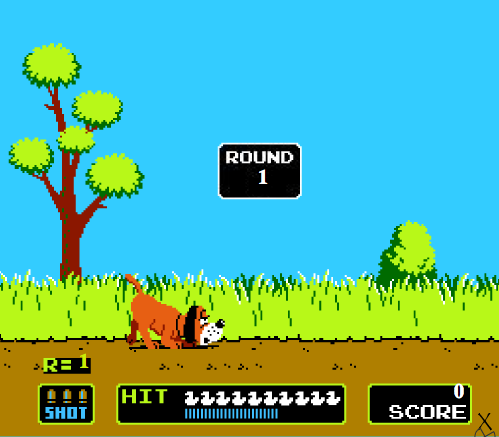
Screenshot from Nintendo game _Duck Hunt_

For those of us fortunate enough to have grown up during a time when game developers were just beginning to explore the potential of 8-bit graphics, the sight of an NES zapper calls to mind nostalgia. Duck Hunt was the very first first-person shooter I ever played, and it is still the most memorable. While pointing the light gun at anything was fun in the beginning, when I was done fooling around and wanted to actually be successful at the game I had to learn how to aim properly to hit the targets.

In writing, paragraphs have to be aimed towards targets as well. Topic sentences accomplish this task for you by pointing your paragraphs in the direction of the main point you're trying to cover. They also let your reader know where you're heading, clarify your ideas, and organize your points. It's can be fun and productive to just mess around writing anything that comes to mind, but if you want your paper to have any chance of being successful, you need to add topic sentences.

A Topic Sentence Defined

A topic sentence is a sentence that states the main idea of a paragraph. It is usually, but not always, located at the beginning of the paragraph. Additionally, a good topic sentence is concise, taking no more words than are absolutely necessary to state the main idea.

Hopefully this definition sounds familiar to you. If not, take a peek at my post about thesis statements. Getting a feeling of deja vu yet? Topic sentences and thesis statements are so similar to one another because they both serve to focus writing. Whereas a thesis statement states the direction of an entire essay and is located at the end of the introductory paragraph, a topic sentence only states the focus of a single paragraph and is placed at its beginning. Interestingly, when you break a paragraph down to its basic components, it's essentially a miniature essay. However, that's a topic to tackle in another post.

Examples of Topic Sentences

It’s time to see what topic sentences look like in action. In the following examples, I will write the topic sentences in bold for easier identification. Notice how the topic sentence contains the main idea of the paragraph and the remaining sentences are 1) relevant and 2) support and/or expand on the topic sentence.

  • Charismatic people always seem to know the right things to say and when to say them.  They don’t pepper their sentences with ‘uhs’ or desperately search for words.  They are polished and articulate, which creates a commanding and powerful presence.  But this enviable performance is not by chance, it is the result of careful preparation.”

    ~Solovic, Susan W. The Girls' Guide to Power and Success. New York: MJF Books, 2001. 79. Print.
  • "Unlike a disease, which has a specific pathological origin, a syndrome is a condition that exists only as a collection of symptoms. Consider cystic fibrosis, a disease that causes the body to produce an unnaturally large amount of sticky mucous, resulting in long-term deterioration of the lungs, as well as other conditions related to mucous production. The disease is present when a person receives a specific gene from both parents. The genes are the cause, the excess mucous production is the effect, and the lung deterioration and a few other conditions are the symptoms. The symptoms are specific to the disease and lead to the specific diagnosis."

    ~Hammerly, Milton, and Cheryl Kimball. What to Do When the Doctor Says It's PCOS. Massachusetts: Fair Winds Press, 2003. 91. Print.
  • The legal profession is known for its mind-boggling complexities, but also for its clever terminology.  One of my favorite creations from this latter category is the ‘attractive nuisance.’  The phrase seems almost perfectly to summarize the yin and yang of life, with its sweet, naughty temptations.  Sadly, in legal terms, what it more specifically refers to is one’s backyard swimming pool, which looks so inviting to the youth of the neighborhood that they can almost be expected to try and jump in at some point.”

    ~Beneke, Jeff. The Fence Bible. Massachusetts: Storey Publishing, 2005. 13. Print.

Who Uses Topic Sentences?

Don't pick up your favorite novel to find examples of topic sentences. In fact, most professional writers whose work is found in bookstores do not use explicit topic sentences in their writing. You definitely won't find many topic sentences in journalism or online; people perusing Internet posts and newspaper articles have short attention spans and will not read large chunks of text, so paragraphs are often no longer than two sentences (if even that long).

However, topic sentences are expected and often required in academic writing, including writing produced in professions that require reports (e.g., medical professionals writing research, lawyers and paralegals working on briefs, and even managers writing productivity reports). If you have any aspirations of making it through your high-school, college, and professional writing responsibilities unscathed, you're going to need to learn start writing topic sentences. But don’t think of topic sentences as a chore; the fact is, writing them will end up saving you time and effort.

How Topic Sentences Make Writing Easier for You

Getting in the habit of writing topic sentences for each paragraph as you work on an essay will actually make writing your essay faster and easier. You have to know what you're trying to say with each paragraph before you can write the topic sentence, so you're essentially being forced to organize your thoughts as you commit them to paper. As someone who's written more essays than she can count during the span of her still-ongoing academic life, trust me when I say making an outline of your main points before you start writing will make writing topic sentences a piece of cake. Once you know what main point or sub-point you're presenting in a paragraph, all that's left to do is supply the evidence to support the paragraph’s main point.

Why wouldn't you want to make essay writing easier for yourself? A topic sentence is a sentence that writes itself because if you know your main point, you know your topic sentence. It's essentially one less sentence you have struggle over in your essay, letting you focus your energy where you need it most: supporting your arguments.  

Not only do topic sentences help you write papers, being able to identify other writers’ topic sentences has benefits of its own.  Since a topic sentence contains the main idea of a paragraph, it can be used to summarize writing sections easily and efficiently.  Professional tutoring services for the SAT and LSAT frequently teach students to look for topic sentences in paragraphs as a simple, fast “trick” to locate information to answer questions. Apply this technique to textbooks to isolate important points quickly and create an outline of each chapter’s main ideas.

Final Thoughts

Topic sentences are considered one of the basics of good writing and mastering them is not something most people can accomplish without practice.  There is much more to learning how to execute them successfully than what I can contain in a single blog post, so stay tuned for future posts that transform main points in an outline into topic sentences, break down the elements of essay paragraphs, and  include examples of paragraphs missing topic sentences.  I will be writing many more blog posts on this topic because I know just how essential a skill writing topic sentences is for you to be successful in your writing endeavors.

A dog in the game Duck Hunt held up the birds you shot when you aimed well. Readers won't do that to let you know your paragraphs hit the mark so remember to get feedback on your writing before you submit it to a professor or supervisor.


Photo credit: MethodShop

Monday, June 1, 2009

The Importance of Topic Sentences

When you read a paragraph and know exactly what that paragraph will cover, you’ve more likely than not just read a good topic sentence.   It’s such a simple sentence to write, yet so many people leave it out of their writing.   But I’m getting ahead of myself…

What is a topic sentence?

In short, a topic sentence is a sentence that sums up the main point of the entire paragraph in which it is contained.  It is most often the first sentence of the paragraph, but doesn’t necessarily have to be. 

Take the following paragraphs from a review I found online about The Day After Tomorrow (warning: beware of spoilers if you haven’t yet seen the movie):

Paleoclimatologists are notoriously brave and of course very fit.  Nary a one of us would hesitate to jump a widening crevasse - twice - while wearing arctic gear - to recover some ice cores which would take 2-3 hours to re-drill.  We're watching out for *your* tax dollars.  Score one for the movie.

I bolded the topic sentence of the paragraph to make it easier to see. Notice that the main point of the entire paragraph is to poke fun at the courage of paleoclimatologists. The first sentence introduces that concept and the remaining sentences in the paragraph act as examples to support it.

Here’s another paragraph from the same review. Again, I'm bolding the topic sentence to make it easier to see.

The silliest thing in the movie is probably intentional, and has has nothing to do with science. Our spunky group of survivors (three high school students, a street person and his dog, a librarian, etc) are stuck in the NY public library, their only source of heat an old fireplace. They have to burn something, but what? The camera pans lovingly over long wooden tables, chairs, paneling. But what do they burn? Books, books and only books. And it's a roaring fire. True, they do burn the tax code first.

I chose this paragraph because it demonstrates that you can give a clear indication of what the main point of the paragraph will be in the topic sentence without actually stating what it is. "The silliest thing in the movie" turns out to be the fact that the characters burn books first when other longer lasting  sources of fuel were all around them. By unveiling what what actually burned (books) only after describing in detail all the burnable materials in the library, the author builds the level of sarcasm.

Don’t think that topic sentences make you “give it all away.”  You’re the author – you control how much information to give your readers.  Topic sentences just give your words a general direction so the reader doesn’t start asking himself “Why are you telling me this?” (Even with topic sentences, there’s no guarantee that he won’t still ask himself that question.  If he does, at least you’ll know it’s not because you don’t have topic sentences.)

An Exercise in Topic Sentences

Read the following paragraph from a student's essay and try and see if you can sense what's wrong with it.  I’ll give you a hint: try and find the topic sentence.

Mallard is a lady with major heart problems.  She is a caring and loving person. She is the main character of the story and is the one who everyone worries about.  Josephine is Mallard's sister; she cares a lot for her sister and loved her.  Josephine was there to help and support Mallard. Richard is the best friend of Mallard's passed husband.  He broke the news to Mallard and was there for support.

At first glance, there’s nothing wrong with this paragraph.  It’s grammatically correct (well, except for a few shifts in tense) and, all in all, a good description of the characters of the story we were discussing.   Reading the paragraph, though, I felt as though something were missing…

If this paragraph were in response to a question I asked, say “Describe the characters in the story,” there wouldn’t be a problem.  I would know immediately what the point of the paragraph was because the question would be right there above it.

In essays, though,  you never just write a single paragraph.  So if a paragraph appears in the middle of a five page paper, you have to let your reader know what it’s doing there.  Add this sentence to that paragraph and see how it suddenly has a purpose:

The characters in the story exist to set into motion the plot’s events. Mallard is a lady with major heart problems…etc.

Topic sentences get more attention when they’re absent than they do when they’re present. 

Photo credit: Aresauburn(TM)