Connect With Me

Twitter Button StumbleUpon Button Delicious Button RSS Feed Button

Thursday, February 21, 2013

New Laptop Just Arrived! Off to a Fresh Start!

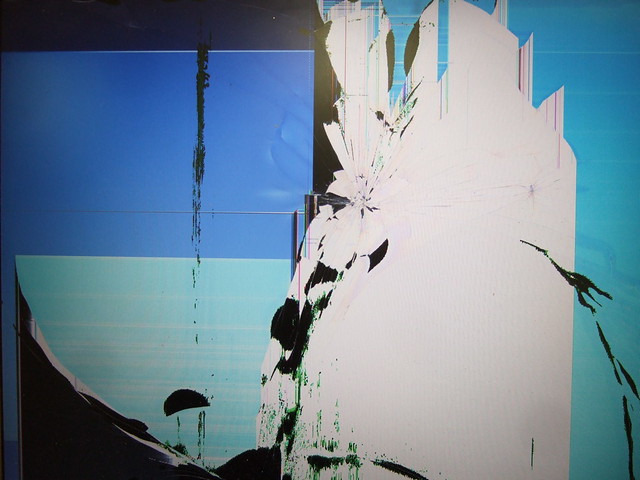
Broken laptop screen

To those who may be wondering: I am, in fact, still alive! I haven’t posted for the past several weeks because an unfortunate accident with my laptop resulted in an inoperable screen. Being a student again means my funds are limited so I put off purchasing a new laptop until the next holiday (and accompanying $ale$) rolled around.  I have the US Presidents (particularly George Washington) to thank for giving me the President’s Day coupon codes I needed to get this beautiful new Lenovo Ideapad!

But just when I thought I was out of the woods, it turns out I’m not exactly home free yet. My beautiful laptop came preinstalled with Windows 8; I’ve read many reviews about how terrible the operating system is, but they in no way prepared me for the reality of trying to use an OS designed for use on a cell phone on a laptop. It was a nightmare. I lasted about 30 minutes before I couldn’t take it anymore and turned the computer off (even that I needed to Google to figure out how to do!).

So for the time being I’m back to using the Asus netbook my sister gave me to tide me over until I got a new laptop. It’s become a dependable companion, even if it is quite small and slow.  I don’t have any of my files saved to it, so uploading posts I’ve already written will have to wait until I can wipe the Ideapad and install Windows 7 on it. Once I do, though, I have a series of templates made that I think students will find very useful for writing and formatting essays and works cited pages correctly.

Thanks for sticking around, all 75 of you who are subscribed! If you’re not already subscribed, click on the orange RSS feed button at the top right corner of this site to have posts delivered directly to your RSS reader OR to your e-mail inbox. It beats constantly checking back to see if a new post has been uploaded!


Photo credit: Lacrymosa

Monday, February 11, 2013

Books You Should Read: _The Eighteen Revenges of Dr. Milan_ by Christopher Ruz

Eighteen Revenges by Chris Ruz

It is my firm belief that the quality of your product is only as strong as the quality of the ingredients you used to make it. If you want your physique to be fit and healthy, you need to eat nutritious foods and exercise regularly. If you want your writing to be syntactically correct and eloquent, you need to read literature that is well written. While I'm not knowledgeable enough about kinesiology to recommend any exercise regimens, I can provide a professional opinion on what books to stock your mental bookshelf with that will provide the examples you need to improve your writing skills.

The classics are wonderful literary works that will expose you to quality writing, but their writing style can be out-dated, making them difficult for you to understand their archaic expressions. Not to mention classical novels tend to be long and tedious – not books you want to dive into when you have a limited amount of spare time to devote to reading. That's why Christopher Ruz's writings are at the top of my list when it comes to recommending literature. His book The Eighteen Revenges of Doctor Milan is particularly well suited to an audience that is limited in free time and prefers more action-packed genres.

After reading Chris Ruz's The Eighteen Revenges of Dr. Milan, I had to compose myself before I could write a proper review of it. As an aspiring novelist, Ruz's facility with words makes me so envious, I can barely stand to keep reading his writing. As a reader, I can't get enough of Ruz's creative turns of phrase, his rich settings dripping with imagery. Eighteen Revenges delivers these things more than any of his other works, and (in my opinion) is his finest writing yet.

Eighteen Revenges is a novella, so it is short enough to be read in one sitting, yet meaty enough that you don't feel cheated out of a full-length, detailed story. I'm a bit of a fast reader but it definitely helped that I could NOT stop reading this book once I started. What I love about the book besides the gritty, dark setting that takes you prisoner with its rich detail is how unconventional the plot is. There is no hero sweeping a reluctant damsel off of her feet; in fact, the "hero" is far from innocent himself and the "damsel" is part of a horrifying mystery that will keep you turning pages, searching for answers. This book is a testament to me that the potential for originality in literature still exists. I wish I could elaborate, but I don't want to rob anyone of the enjoyment of uncovering each piece of the story for themselves.

Ruz's writing always gives me a new appreciation of the artistry involved in finding the perfect words. Eighteen Revenges delivers so much spot-on, emotion-evoking writing that I forget I'm reading words, not seeing images. Take these sentences, for example:

"A scattering of tiny lights were the prisoner's chambers, thousands and thousands of rooms twisting with the grain of the rock, bored into the skin of the mountain like honeycomb cells, like alveoli."
"The noise of machinery grew as he descended, the clank and whistle of valves echoing off the rock.
Men swore in chorus. Steel thuds were followed by the sudden hiss of compressed air. Far below, the base of the Pike was a hive of activity, hundreds of prisoners circling with their overalls hanging around their waists, chests smeared with dust and sweat. Their headlamps winked like distant stars."

Seriously, who writes like this?! What has to be happening in Ruz's brain for him to come up with these scenes? If you appreciate fine writing or want to expose yourself to writing you can trust is written well, you HAVE to read this book. Visit Amazon.com to purchase it for a reasonable $2.99 or to read a sample chapter.

Tuesday, January 29, 2013

Practice Finding and Supporting Topic Sentences

Red pen on paper

Because you are so emotionally invested in your own writing, it's often best to practice your flaw-finding skills with the work of others. Not only can you bring the full force of your writing knowledge to bear on the essay without fear of making a mortal enemy of a classmate or coworker, it helps ease any guilt you may feel about criticizing someone else's work when that person is a stranger far-removed from your life. The following piece of writing is so full of errors, it's a perfect vehicle for honing your revision and editing skills.

To be certain no one is distracted from analyzing the writing itself, I will not reveal the name of the author*. I will say that I found this article in a community college newspaper for which there are no online archives. It was published in February 2011 during a time when society was facing the same issues it faces today with school-related shootings. It will become apparent in the writing that it was written by an English composition instructor. I can't adequately describe how disappointed I am in this quality of writing for someone whose profession it is to teach writing to others, but there may have been reasons of which I am unaware for the caliber of this article's writing (Goodness knows I rush to publish some blog posts at the expense of the writing). At any rate, this article demonstrates that no one is perfect, not even writing instructors.

While there are many errors in this short excerpt, I want to focus on its topic sentences. Feel free to try and locate all the errors you can find, though, as it's great practice. I will include a link to a more full commentary of this excerpt's shortcomings at the end of this blog post. Let me know if I've missed any!

The Excerpt

“Texas legislators are poised to pass a law that will allow professors and students to pack heat on college campuses. If this happens, I will leave the classroom. Wisconsin Legislators, stay in hiding. Run for the good of the people you represent. We here in Texas are in the same boat as you.  But Texas is a “right to work” state, which means, no unions. No wait, there are some unions.”

“Now after I have a lot of experience, I’m actually very good at teaching. I’m not just all charisma and passion for writing. I can inspire students to enjoy literature, I can make the MLA citation style relevant, I can deal with plagiarism, but now will I have to figure out how to handle a situation where a student points a gun at another student when they disagree or break up? Is that ten points off the final exam? I will leave the classroom before I have to do that. In the mean time, I’m going to do something about it. Wisconsin Legislators keep running. Do not vote. Texans you should’ve voted. See who your absence at the voting booth has put into office? Well, now you need to do something. Students, you have to vote with your feet and your cell phones. Call your legislators. Say no to guns in the classroom.“

“The irony is that because college professors in Texas do not have a strong union, for all our brains, we have not been taught how to convene 10,000 strong at our capitol to act as one. So it may be just me and some of my colleagues unofficially representing us all.  And if we lose this time, if we don’t stand up now, we will not have one voice to represent our views as policies are haphazardly slapped together to deal with students on college campuses with guns. Caravan to Austin with your neighbors, friends, and concerned parents. Like our brothers and sisters in Wisconsin, we have to practice what we preach. We have to show our students that we did everything we could for them, that we gave a damn. Maybe the pen really is mightier than the sword.”

The Critique

Let's jump right in and start with the article's first paragraph:

“Texas legislators are poised to pass a law that will allow professors and students to pack heat on college campuses. If this happens, I will leave the classroom. Wisconsin Legislators, stay in hiding. Run for the good of the people you represent. We here in Texas are in the same boat as you.  But Texas is a “right to work” state, which means, no unions. No wait, there are some unions.”

If I didn't already know it, I would never have guessed that this paragraph was the introductory paragraph. Traditional introductions usually begin by capturing the reader's attention with some sort of “hook” and include a thesis statement that identifies the essay's overall argument (usually located at the end of the paragraph in order to immediately transition to the supporting main points). The preceding paragraph only resembles an introduction in that its elements are in reverse order.

The first sentence states the overall topic of the essay and so can be considered a thesis statement. However, its placement at the beginning of the paragraph resembles the way topic sentences are placed at the beginning of body paragraphs, and, while not “incorrect” since this article is not an academic essay, fails to engage and lead the reader towards a point of view the way a conventional introduction would. In fact, the first sentence does nothing to direct the focus of the paragraph onto a single point. The remainder of the paragraph is all over the place! It jumps from Texas to Wisconsin with no background information for readers not up-to-date on current events. Then it jumps back to Texas and an awkward contradiction about whether or not unions exist in the state.

The first paragraph was doomed from its start due to poor construction. Let's see if the second paragraph fares any better:

“Now after I have a lot of experience, I’m actually very good at teaching. I’m not just all charisma and passion for writing. I can inspire students to enjoy literature, I can make the MLA citation style relevant, I can deal with plagiarism, but now will I have to figure out how to handle a situation where a student points a gun at another student when they disagree or break up? Is that ten points off the final exam? I will leave the classroom before I have to do that. In the mean time, I’m going to do something about it. Wisconsin Legislators keep running. Do not vote. Texans you should’ve voted. See who your absence at the voting booth has put into office? Well, now you need to do something. Students, you have to vote with your feet and your cell phones. Call your legislators. Say no to guns in the classroom.“

I'm having a difficult time figuring out which sentence in the preceding paragraph is the topic sentence because it is as all over the place as the first paragraph. The first sentence is certainly not the topic sentence because the majority of the paragraph is focused on politics, not his or her teaching skills. The ending of the second sentence “will I have to figure out how to handle a situation where a student points a gun at another student when they disagree or break up?” could be the topic sentence, but only the third sentence elaborates on this point. The fourth sentence transitions into a vague statement that is never explained: “In the mean time, I’m going to do something about it.” Because the fourth sentence is clearly a transition to a NEW point, the fifth sentence should be the beginning of a new paragraph.

Rather than starting a new paragraph that explains what s/he plans on doing about the situation, the fifth paragraph instead references Wisconsin (again without supplying background information). The author instructs the legislators there not to vote and then berates Texans for the consequences of their failure to vote...without explaining what those consequences were. The remaining sentences are a call to action for students to vote with their “feet” (What does that mean? Is s/he asking for students to stage a campus walk-out?) and their “cell phones.” Calls-to-action belong at the END of essays, where they are more effective. Based on these sentences, I would have thought this paragraph were the concluding paragraph.

Instead, the following paragraph is the conclusion:

“The irony is that because college professors in Texas do not have a strong union, for all our brains, we have not been taught how to convene 10,000 strong at our capitol to act as one. So it may be just me and some of my colleagues unofficially representing us all.  And if we lose this time, if we don’t stand up now, we will not have one voice to represent our views as policies are haphazardly slapped together to deal with students on college campuses with guns. Caravan to Austin with your neighbors, friends, and concerned parents. Like our brothers and sisters in Wisconsin, we have to practice what we preach. We have to show our students that we did everything we could for them, that we gave a damn. Maybe the pen really is mightier than the sword.”

Despite the sudden shift in person and intrusive phrase “for all our brains,” the first sentence in this paragraph actually does act as the topic sentence. While it does have that strength going for it, the rest of the paragraph could use some reorganization and rewording to make it stronger. For example, “Like our brothers and sisters in Wisconsin, we have to practice what we preach” would be more effective if it preceded the call-to-action “Caravan to Austin with your neighbors, friends, and concerned parents.” Speaking of the call-to-action, it should be the concluding sentence in the paragraph, not “Maybe the pen really is mightier than the sword,” which makes no sense as the author has not mentioned writing as a form of voicing her/his concerns (instead, s/he called on people to “use their feet,” place calls to legislators, and drive to the state capitol).

More Practice Finding Writing Errors

Hopefully looking at a stranger's writing with a critical eye has helped you become aware of the kinds of things readers (e.g., teachers and bosses) look for when judging the work in front of them. There are plenty of other writing mistakes beyond how well each paragraph adhered to its topic sentence (if it had one); I've gone ahead and identified all of these errors in a separate document that you can download from Google Docs. I used endnotes to identify errors so that you could have a chance to figure out what each writing error is before scrolling down to the end of the page to see the answer. Feel free to unleash your writing wrath on this article without fear of alienating someone you have to interact with regularly. I certainly won't tell if you don't!


*If you are the author of the article from which I excerpted these paragraphs and would like proper attribution for your writing, please e-mail me and let me know. While I am normally religious about making sure people receive recognition for their work, I feel in this particular case the author may not want the recognition.

Photo credit: Jenny Kaczorowski

Sunday, January 20, 2013

Why You Should Work on Your Writing Skills

Free weights on the floor.

I’d like to start this new year the way I start new classes, by explaining the value of the lessons I try to impart. It’s difficult to learn something if the desire to learn isn’t there, and the desire won’t form until you know why that something is worth knowing. We live in a world full of opportunities, not to mention distractions, all vying for our attention. Since the number of hours in each day are finite, we need to make smart choices as to how we spend our time. If you're not already committed to becoming the best writer you can be, let me try to convince you that improving your writing is a worthwhile endeavor.

Academic Benefits

Although I find the personal benefits of writing well more rewarding, it's difficult to convince students that there are more important things in life than one's grade in a class. As a current student myself, I completely understand this prioritization. I work myself into emotional knots if I think I'm at risk for making less than an A in a class because so much depends on academic performance. Scholarships, financial aid, and admittance into competitive schools and programs are all jeopardized by subpar grades. Nowadays, keeping grades high necessitates writing well.

Since I'm an English teacher, let's look at those classes first. Every student, regardless of intended major, MUST take English classes through college. Composition I and II are required core classes in every US university, and passing them with a good grade is essential for undergraduates. No problem! Right? Well, not if you have a professor like the one from whom's syllabus the following excerpts come. (There's are two errors in the first paragraph that always amuse me every time I see them. See if you can find them.)

Instant F Errors

Instant F Errors 2 

These excerpts from actual syllabi should help you understand why many students barely squeak by composition classes with a passing grade (if they haven't dropped it to duck a failing grade first). To be honest, I'd be pretty frightened myself if I saw the above paragraph on one of my classes' syllabi...and I TEACH writing! It's very easy to accidentally let a typo slip by when proof-reading a paper for the umpteenth time. Tutors at writing centers are trained not to point out every single error for students, making the life of a non-native English-speaking student enrolled in a class like this a nightmare. As bleak as it may appear, students who put forth the effort and time to remediate their writing skills do pass; students who don't have the time or aren't interested in pushing themselves, don't do as well.

Non-English classes require writing components as well now that the entire educational system has shifted towards writing across the curriculum. This shift has spread past high-school into university classes. While math and science classes may not be full of essay assignments, many other core classes are writing intensive (e.g., history, philosophy, anthropology, government, etc.). Going further? Graduate school, regardless of the subject matter, is writing intensive. Every class includes essays and research papers, and the comprehensive exams at the end are in essay format (let's not forget the thesis and/or dissertation). It's preparation for professional writing responsibilities. Writing is a fact of life in school now. Getting good grades means learning to write well.

Professional Benefits

I want more for my students than struggling to make ends meet with a minimum-wage job. While I accept that not everyone wants to become an author, many people fail to realize just how many other jobs include writing as a job requirement. Engineers, nurses, police officers, teachers...pretty much every occupation we consider a career has some writing component comprising it. While jobs a little lower on the totem pole don't necessitate as many reports, they still have their fair share of writing. When I was a teenager working as a receptionist at veterinarian's office, the vet techs and I wrote the visit details in each animal's file (I still remember having to write “diarrhea” 500 times after misspelling it in one file!). Dental hygienists, administrative assistants, even a/c technicians write!

While your writing ability isn't indicative of how well you can do your job (unless you're a writer, of course), it's often the only aspect of your work that gets seen by those in a position to promote you. Writing may not be your specialty, but since it's aspect of yourself seen first, you need to make it shine to draw attention to you, and subsequently your other talents. It's important to remember that more writing responsibilities usually accompany promotions. Let's not forget how important it is to impress your customers; misspelling something on their receipt isn't the way to garner confidence in your workmanship.

Personal Benefits

I won't spend too much time on this point because this blog post is long enough as it is without me trying to describe something that's best experienced, not just read about. While I can't effectively convey to you the sense of inner peace sitting down and writing gives me when I'm at school surrounded by bustling, noisy crowds, I can list some ways your life can be improved by working on how well you write.

Writing is an orderly task. There are rules for proper word placement on the sentence level and for proper sentence placement on the paragraph level. Making sense of and organizing a jumble of ideas gets easier with practice, and hopefully this skill will leak into the rest of your life, helping you to be a more objective, rational human being. Formulating coherent, substantiated arguments improves your critical thinking abilities as well as your ability to persuade.

I believe improving your writing ability is an exercise in improving your life.

No One Is Perfect

Notice that nowhere in this post have I said that learning to write well is easy or fast. Some people are better at it than others, of course, but excellent writing takes effort and time, regardless of talent. In order to show you that we all have to start somewhere, I present the grade and feedback I received on one of my undergraduate essay assignments. It is the only one I've managed to save over all these years, so you'll have to take my word that I have received much worse.

I don't care how aloof you are or pretend to be, it hurts when someone criticizes your writing. I still remember when I first read the comments for my paper. I was livid! I recall thinking something along the lines of “Illogical?! I'll show YOU illogical! You're mother's illogical! How about that?!” It makes me laugh looking back on it now, but I remember being really angry.

For all the B's (and even some low C's!) I received on essays in school, I survived the heartache, learned from it, and I think I'm doing pretty well for myself now. Earning a bad grade on a written assignment is not the end of life as you know it, and it most likely will not keep you from pursuing your dream career. Keep your chin up, keep plodding along, and keep learning. It's worth suffering some discomfort now to become a competent (even excellent!) writer.


Undergraduate Paper Feedback

Photo credit: Kaleb Fulgham

Tuesday, December 25, 2012

Merry Christmas, Happy Hanukkah, Blessed Winter Solstice!

PC240005

I hope your holidays have been as enjoyable as mine have been. This December I’ve used my vacation to spend time with family and savor our Christmas traditions more than I have in many years. The presents were less plentiful this year, but I can’t say I missed them.  Good friends and family, happy dogs, and delicious food were all the gifts I needed (or wanted!).

I’m a quiet, introspective person so spending the holidays with my very small immediate family while we cook traditional Peruvian and Romanian dishes and watch Christmas classics on television is my idea of a perfect Christmas. I have friends who are far from loved ones this winter and I feel for everyone who can’t spent this holiday in the comfort of home.  There’s a classic Spanish Christmas song that always brings a tear to my eye when I hear it. If you’re far from the ones you hold dear, then this song is for you.

Ven A Mi Casa Esta Navidad by Alvaro Torres

Tu que estas lejos de tus amigos     You, who are far from your friends,
De tu tierra y de tu hogar     From your country, and your home
Y tienes pena, pena en el alma     And you have sadness, sadness in your soul
Porque no dejas de pensar     Because you can’t stop thinking
Tu que esta noche no puedes, dejar de recordar     You, who this night, can’t stop remembering
Quiero que sepas que aquí en mi mesa    I want you to know that here at my table
para ti tengo un lugar     For you I have a place.
Por eso y muchas cosas más     For that and many more things,
Ven a mi casa esta Navidad     Come to my house this Christmas.
Por eso y muchas cosas más  For that and many more things,
Ven a mi casa esta Navidad     Come to my house this Christmas.
Tu que recuerdas quizá a tu madre     You, who remembers perhaps your mother,
O a un hijo que no esta     Or a son who isn’t here,
Quiero que sepas que en esta noche     I want you to know that this night
él te acompañará     He will accompany you.
No vayas solo por esas calles Don’t go alone through those streets
queriéndote aturdir     Wanting to be in a daze.
Ven con nosotros y a nuestro lado    Come with us, and by our side,
intenta sonreír     Try to smile.
Por eso y muchas cosas más    For that and many more things,
Ven a mi casa esta Navidad      Come to my house this Christmas.
Por eso y muchas cosas más    For that and many more things,
Ven a mi casa esta Navidad     Come to my house this Christmas.

Luis Alguile sings a beautiful version of this Spanish classic. Even if you don’t understand Spanish, the catchy melody and the emotion in his voice cross language barriers.Click here to listen to this song on YouTube.

Here are some recent photos of my dogs to keep you company if you are missing your own pets or are living in a place that doesn’t allow animals. Happy holidays to everyone out in Internet-land!

PC240009

PC240010

Editing Your Writing: Removing Pleonasms

Redundant advertising on shampoo bottle

Brevity is one of the characteristics of good writing; it’s also one of the hardest for writers (especially new ones) to achieve. Writers have a tendency to hang on to the words they commit to paper, even when editing them out would result in better prose (a process Sir Arthur Quiller-Couch called “murdering your darlings”). When the writing is your own, you’re often the last person to realize some words, sentences, or even entire paragraphs are superfluous and need to go. It’s best to start desensitizing yourself to the pain of deleting your own writing by editing out redundancies that are easy for even novice writers to spot.

These redundancies are called pleonasms, words that are repetitive and unnecessary to the meaning of a sentence. They usually appear alongside a synonym and are easier to recognize than other forms of verbiage because two adjacent words that have the same meaning tend to call attention to themselves. An easier way to identify pleonasms is to remember they are the opposite of oxymorons, a combination of contradictory terms (e.g., jumpo shrimp).

Examples of Pleonasms

Examples of redundant phrases can be found very easily just driving to the grocery store or the local mall. If you’re not the adventuring type, opening the paper or turning on the television will yield just as many pleonasms. Here are just a few of the more common ones:

  • “Free gift” – Presents, by definition, do not cost you anything.
  • “New [and] improved” – Improvements can only be done to pre-existing items.
  • “Lift/Raise/Climb up” or “Descend/Fall/Lower down” – Each of these verbs already contains directionality.
  • “Unexpected surprise” – Surprises are never expected.

You should start to get the idea what a repetitious phrase looks like now. Sometimes there may be a conjunction like “and” or a comma separating words that are synonymous, as in the phrases “old and ancient ruins” and “frigid, cold depths.” In these cases, one word can still be deleted to make the message more succinct (just remember to also remove the conjunction or comma!). For a very thorough list of English pleonasms, see Pleonasms and Redundant Phrases.  Once you start keeping your eyes peeled for redundancies in writing, you’re going to start seeing pleonasms everywhere!

Great writing doesn’t have to be overflowing with flowery language that spills onto page after page.  Some of the most beloved and impactful novels we have are slim paperbacks that barely break 100 pages. George Orwell’s 1984, John Steinbeck’s Of Mice and Men, and Ray Bradbury’s Fahrenheit 451 all come to mind.

I cannot tell you that editing your own work is easy, especially when it comes to deleting words you spent long hours coming up with, but what I can assure you is that it gets easier with practice. Removing repetitious phrases from your writing is a simple exercise that is guaranteed to make a noticeable improvement in your work.


Photo credit: George Hatcher’s Flickr Photostream

Saturday, December 1, 2012

Topic Sentences: An Introduction

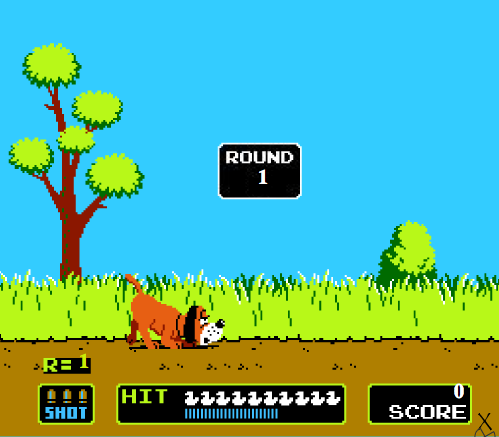
Screenshot from Nintendo game _Duck Hunt_

For those of us fortunate enough to have grown up during a time when game developers were just beginning to explore the potential of 8-bit graphics, the sight of an NES zapper calls to mind nostalgia. Duck Hunt was the very first first-person shooter I ever played, and it is still the most memorable. While pointing the light gun at anything was fun in the beginning, when I was done fooling around and wanted to actually be successful at the game I had to learn how to aim properly to hit the targets.

In writing, paragraphs have to be aimed towards targets as well. Topic sentences accomplish this task for you by pointing your paragraphs in the direction of the main point you're trying to cover. They also let your reader know where you're heading, clarify your ideas, and organize your points. It's can be fun and productive to just mess around writing anything that comes to mind, but if you want your paper to have any chance of being successful, you need to add topic sentences.

A Topic Sentence Defined

A topic sentence is a sentence that states the main idea of a paragraph. It is usually, but not always, located at the beginning of the paragraph. Additionally, a good topic sentence is concise, taking no more words than are absolutely necessary to state the main idea.

Hopefully this definition sounds familiar to you. If not, take a peek at my post about thesis statements. Getting a feeling of deja vu yet? Topic sentences and thesis statements are so similar to one another because they both serve to focus writing. Whereas a thesis statement states the direction of an entire essay and is located at the end of the introductory paragraph, a topic sentence only states the focus of a single paragraph and is placed at its beginning. Interestingly, when you break a paragraph down to its basic components, it's essentially a miniature essay. However, that's a topic to tackle in another post.

Examples of Topic Sentences

It’s time to see what topic sentences look like in action. In the following examples, I will write the topic sentences in bold for easier identification. Notice how the topic sentence contains the main idea of the paragraph and the remaining sentences are 1) relevant and 2) support and/or expand on the topic sentence.

  • “Charismatic people always seem to know the right things to say and when to say them.  They don’t pepper their sentences with ‘uhs’ or desperately search for words.  They are polished and articulate, which creates a commanding and powerful presence.  But this enviable performance is not by chance, it is the result of careful preparation.”

    ~Solovic, Susan W. The Girls' Guide to Power and Success. New York: MJF Books, 2001. 79. Print.
  • "Unlike a disease, which has a specific pathological origin, a syndrome is a condition that exists only as a collection of symptoms. Consider cystic fibrosis, a disease that causes the body to produce an unnaturally large amount of sticky mucous, resulting in long-term deterioration of the lungs, as well as other conditions related to mucous production. The disease is present when a person receives a specific gene from both parents. The genes are the cause, the excess mucous production is the effect, and the lung deterioration and a few other conditions are the symptoms. The symptoms are specific to the disease and lead to the specific diagnosis."

    ~Hammerly, Milton, and Cheryl Kimball. What to Do When the Doctor Says It's PCOS. Massachusetts: Fair Winds Press, 2003. 91. Print.
  • “The legal profession is known for its mind-boggling complexities, but also for its clever terminology.  One of my favorite creations from this latter category is the ‘attractive nuisance.’  The phrase seems almost perfectly to summarize the yin and yang of life, with its sweet, naughty temptations.  Sadly, in legal terms, what it more specifically refers to is one’s backyard swimming pool, which looks so inviting to the youth of the neighborhood that they can almost be expected to try and jump in at some point.”

    ~Beneke, Jeff. The Fence Bible. Massachusetts: Storey Publishing, 2005. 13. Print.

Who Uses Topic Sentences?

Don't pick up your favorite novel to find examples of topic sentences. In fact, most professional writers whose work is found in bookstores do not use explicit topic sentences in their writing. You definitely won't find many topic sentences in journalism or online; people perusing Internet posts and newspaper articles have short attention spans and will not read large chunks of text, so paragraphs are often no longer than two sentences (if even that long).

However, topic sentences are expected and often required in academic writing, including writing produced in professions that require reports (e.g., medical professionals writing research, lawyers and paralegals working on briefs, and even managers writing productivity reports). If you have any aspirations of making it through your high-school, college, and professional writing responsibilities unscathed, you're going to need to learn start writing topic sentences. But don’t think of topic sentences as a chore; the fact is, writing them will end up saving you time and effort.

How Topic Sentences Make Writing Easier for You

Getting in the habit of writing topic sentences for each paragraph as you work on an essay will actually make writing your essay faster and easier. You have to know what you're trying to say with each paragraph before you can write the topic sentence, so you're essentially being forced to organize your thoughts as you commit them to paper. As someone who's written more essays than she can count during the span of her still-ongoing academic life, trust me when I say making an outline of your main points before you start writing will make writing topic sentences a piece of cake. Once you know what main point or sub-point you're presenting in a paragraph, all that's left to do is supply the evidence to support the paragraph’s main point.

Why wouldn't you want to make essay writing easier for yourself? A topic sentence is a sentence that writes itself because if you know your main point, you know your topic sentence. It's essentially one less sentence you have struggle over in your essay, letting you focus your energy where you need it most: supporting your arguments.  

Not only do topic sentences help you write papers, being able to identify other writers’ topic sentences has benefits of its own.  Since a topic sentence contains the main idea of a paragraph, it can be used to summarize writing sections easily and efficiently.  Professional tutoring services for the SAT and LSAT frequently teach students to look for topic sentences in paragraphs as a simple, fast “trick” to locate information to answer questions. Apply this technique to textbooks to isolate important points quickly and create an outline of each chapter’s main ideas.

Final Thoughts

Topic sentences are considered one of the basics of good writing and mastering them is not something most people can accomplish without practice.  There is much more to learning how to execute them successfully than what I can contain in a single blog post, so stay tuned for future posts that transform main points in an outline into topic sentences, break down the elements of essay paragraphs, and  include examples of paragraphs missing topic sentences.  I will be writing many more blog posts on this topic because I know just how essential a skill writing topic sentences is for you to be successful in your writing endeavors.

A dog in the game Duck Hunt held up the birds you shot when you aimed well. Readers won't do that to let you know your paragraphs hit the mark so remember to get feedback on your writing before you submit it to a professor or supervisor.


Photo credit: MethodShop